
Key Takeaway
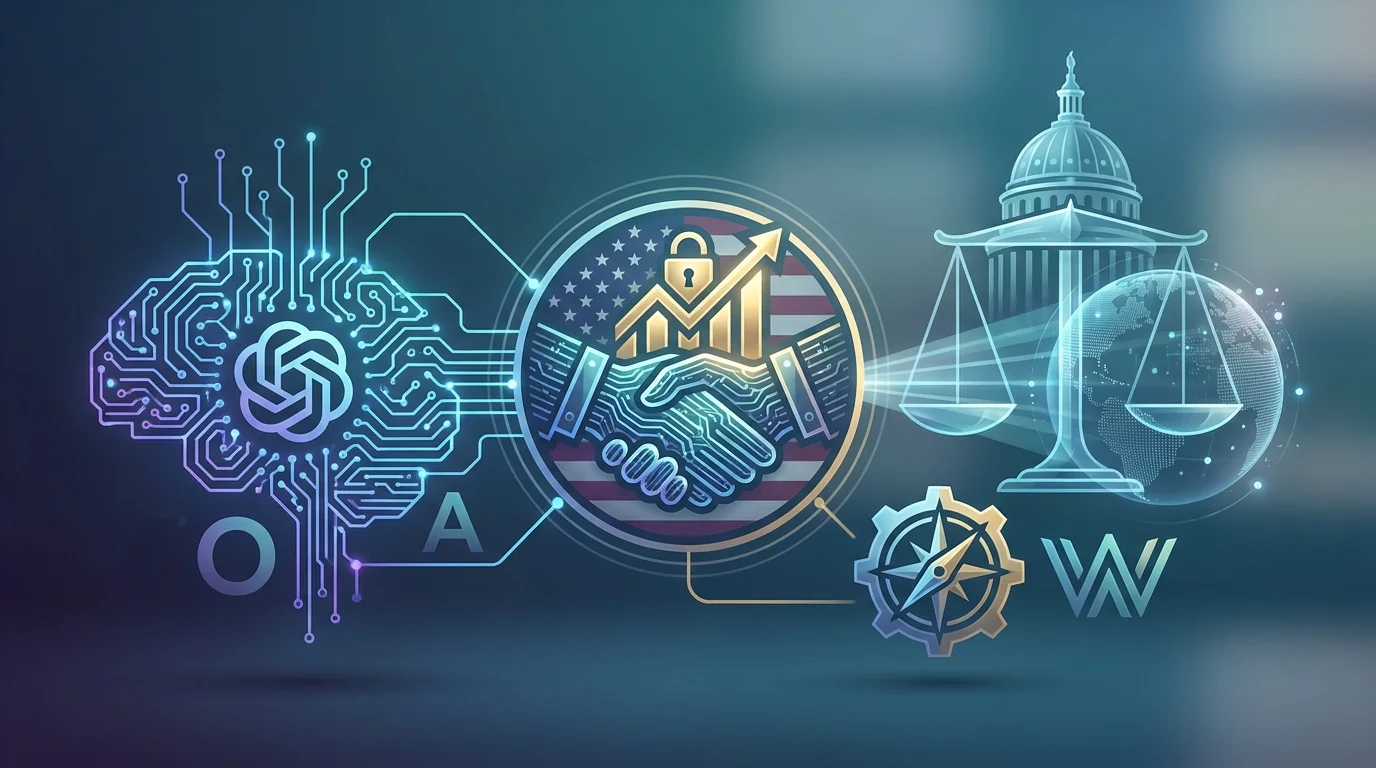
OpenAI CEO Sam Altman has proposed an unprecedented arrangement that would give the US government a 5% equity stake in the $852 billion AI company, creating a potential "Public Wealth Fund" valued at approximately $42.6 billion. This groundbreaking proposal represents a radical reimagining of how the economic benefits from artificial intelligence could be distributed to ordinary Americans, bypassing traditional taxation mechanisms in favor of direct public ownership. The plan, which Altman has discussed directly with President Trump, Commerce Secretary Howard Lutnick, and Treasury Secretary Scott Bessent, could serve as a template for other AI companies including Anthropic, Google, and Meta to follow suit.
The significance of this proposal extends far beyond OpenAI itself. If implemented, it would mark the first time a major frontier AI lab has voluntarily transferred ownership to the public sector, potentially establishing a new paradigm for how society shares in the wealth generated by transformative technologies. The mechanism draws inspiration from Alaska's Permanent Fund, which has distributed oil revenue dividends to state residents for decades, suggesting a model where AI-generated prosperity could flow directly to citizens rather than being captured entirely by private shareholders.
Understanding the Public Wealth Fund Proposal
The Mechanics of the Deal
At its core, the Public Wealth Fund proposal involves OpenAI donating 5% of its equity to a government-backed investment vehicle modeled after sovereign wealth funds. Based on OpenAI's current private valuation of approximately $852 billion following its March 2026 funding round, this stake would be worth roughly $42.6 billion today. However, the potential value could escalate significantly if OpenAI achieves its reported goal of a $1 trillion valuation in its planned initial public offering, which would push the government's stake to approximately $50 billion.
The mechanism is designed to be cash-free for OpenAI, meaning the company would not need to sell shares or dilute existing investors who paid cash for their positions. Instead, OpenAI would issue or reserve equity specifically for the government vehicle, allowing the arrangement to proceed without immediate financial impact on the company's balance sheet or income statement. This structure addresses one of the primary concerns that might otherwise prevent such a deal: the potential drag on company resources that a cash donation would create.
Altman has argued that this approach represents the most effective way to ensure that ordinary Americans, including those who do not participate in financial markets, can benefit from the economic gains generated by artificial intelligence. In an April 2026 policy paper titled "Industrial Policy for the Intelligence Age," OpenAI explicitly proposed that "returns from the Fund could be distributed directly to citizens, allowing more people to participate directly in the upside of AI-driven growth, regardless of their starting wealth or access to capital."
Historical Precedent and the Alaska Model
The proposal draws direct inspiration from the Alaska Permanent Fund, established in 1976 to invest the state's oil wealth and distribute annual dividends to residents. As of May 31, 2026, the Alaska Permanent Fund held approximately $91.2 billion in assets and has paid dividends to Alaska residents every year since 1982. The 2024 dividend of $1,702 per resident demonstrates how such a fund can create a tangible, recurring benefit for citizens from natural resource wealth.
Altman and other OpenAI executives have suggested that America's leading AI developers should each allot roughly 5% of their equity to a similar government-backed investment vehicle. The comparison to oil wealth is deliberate: just as Alaska's oil resources were treated as a shared asset belonging to all residents, Altman appears to be positioning AI capabilities as a form of societal wealth that should generate returns for the broader public rather than exclusively for private investors.
The Alaska model offers several attractive features that could translate to an AI-focused Public Wealth Fund. First, it creates a mechanism for intergenerational wealth transfer, ensuring that current AI development benefits future citizens rather than being captured entirely by present stakeholders. Second, it establishes a politically durable structure that can survive changes in administration and policy priorities. Third, it provides a tangible, regular benefit that citizens can count on, creating political support for the fund's continued operation.
The Political Context and Strategic Rationale
The timing of this proposal is not coincidental. OpenAI and its chief rival Anthropic have both faced increasing scrutiny from US regulators, with recent model releases held up by government review. Some Republican lawmakers and advisers to President Trump have advocated for tighter regulation of the AI sector, creating an environment where AI companies face potential constraints on their operations and growth.
By proposing to give the government a direct financial stake in OpenAI's success, Altman is effectively offering a mechanism to align the interests of the public sector with those of the company. If the government owns a piece of OpenAI, the theory goes, regulators and policymakers have an incentive to foster the company's growth rather than constrain it. This alignment of interests could prove valuable as OpenAI navigates an increasingly complex regulatory landscape and prepares for what could be one of the largest IPOs in history.
The proposal also addresses growing public concern about wealth inequality and the concentration of AI benefits among a small group of technologists and investors. As AI systems become more capable and economically significant, questions about who benefits from this technological revolution have become increasingly prominent in political discourse. By offering to share ownership with the public, OpenAI is attempting to preempt criticism that it is capturing value that should be more broadly distributed.
Investment Implications and Market Impact
The Coming Wave of AI IPOs
OpenAI's proposal arrives at a pivotal moment for AI companies and public markets. The second half of 2026 is shaping up to be one of the most significant periods for technology IPOs in history, with SpaceX, OpenAI, Anthropic, and potentially Databricks all expected to go public. Combined, these companies represent over $3 trillion in private market valuation, making this the single largest transfer of technology value from private to public markets ever witnessed.
SpaceX's June 2026 IPO, which valued the company at approximately $1.75 trillion, set the stage for this wave of mega-listings. The offering was notable for its unprecedented 30% retail allocation, three times the typical retail share of IPOs, signaling founder Elon Musk's intent to create broad public ownership of the company. OpenAI's potential IPO at an $850 billion to $1 trillion valuation would make it roughly equivalent to Tesla's current market capitalization, while Anthropic's expected $380 billion valuation would exceed that of Goldman Sachs.
For investors, this wave of AI IPOs represents both opportunity and risk. On the opportunity side, these companies are at the forefront of what many believe will be the most significant technological transformation since the internet. Companies that successfully capture value from AI adoption could generate substantial returns for shareholders. On the risk side, valuations are extremely high by historical standards, and the companies face intense competition, regulatory uncertainty, and the challenge of converting technological leadership into sustainable profits.
How to Gain Exposure to AI Growth
While direct investment in OpenAI remains limited to accredited investors and secondary markets, several pathways exist for retail investors to gain exposure to the AI sector's growth. Understanding these options is crucial for investors who want to participate in the AI revolution without waiting for OpenAI's eventual public listing.
The most direct approach involves investing in publicly traded companies that are deeply integrated with OpenAI or that compete in the same space. Microsoft, which has a strategic partnership with OpenAI and has integrated AI capabilities across its Azure cloud platform, Microsoft 365 productivity suite, and GitHub Copilot developer tools, offers one of the most diversified ways to gain AI exposure. Microsoft's substantial investment in OpenAI and its exclusive cloud provider status for OpenAI's workloads make it a proxy for OpenAI's commercial success.
For investors seeking exposure to the infrastructure layer of AI, Nvidia remains the dominant supplier of graphics processing units used for AI model training and inference. The company's GPUs power the world's most advanced AI computing facilities, and its largest customers include Microsoft, Amazon, Alphabet, and Meta. Despite concerns about potential overcapacity in AI infrastructure, Nvidia's technological leadership and ecosystem lock-in create significant competitive advantages.
Other semiconductor companies are also positioning to capture AI-related demand. Broadcom has emerged as a significant force in AI infrastructure, engineering bespoke AI accelerators and networking equipment for hyperscale data centers. The company's custom chip business has attracted major AI customers seeking alternatives to Nvidia's offerings. Similarly, AMD has been gaining market share in data center CPUs and is aggressively competing in AI accelerators, though it faces an uphill battle against Nvidia's established ecosystem.
For investors interested in the application layer of AI, Meta Platforms has been pouring massive capital into proprietary AI infrastructure while potentially positioning to monetize cloud capabilities. The company's AI investments span its social media platforms, its Reality Labs virtual and augmented reality division, and its growing infrastructure business. Alphabet, through Google DeepMind and its cloud AI services, represents another major player with significant AI capabilities and commercial applications.
Pre-IPO Investment Opportunities
For investors seeking more direct exposure to private AI companies, several vehicles exist that provide access to pre-IPO shares. The Destiny Tech100 closed-end fund, traded on the NYSE under the ticker DXYZ, holds stakes in over 100 private technology unicorns including SpaceX, OpenAI, Anthropic, and Databricks. This fund allows retail investors to buy exposure to these companies like a regular stock, though investors should be aware that the fund often trades at a significant premium to its net asset value.
The ARK Venture Fund, available through platforms like Robinhood and Titan with a $500 minimum investment, holds direct positions in SpaceX and OpenAI alongside public biotechnology and technology companies. Cathie Wood's ARK Invest has been a vocal proponent of disruptive innovation, and this fund provides concentrated exposure to the AI and space sectors that ARK believes will drive significant growth in coming years.
For accredited investors, secondary markets like Forge Global and EquityZen offer the ability to buy shares directly from employees and early investors in companies like SpaceX, OpenAI, and Anthropic. These platforms typically require minimum investments of $10,000 to $50,000 and offer direct ownership of shares, though liquidity is limited and pricing can be opaque. Special purpose vehicles through platforms like AngelList and Republic also pool capital to invest in late-stage AI rounds, with some vehicles open to non-accredited investors at minimums ranging from $1,000 to $10,000.
Regulatory and Political Considerations
The Congressional Approval Challenge
Despite the conceptual appeal of the Public Wealth Fund proposal, significant hurdles remain before it could be implemented. Any formal arrangement would likely require Congressional approval, which introduces substantial political complexity into the equation. The current political environment is characterized by deep partisan divisions, and any proposal involving government ownership of private companies is likely to generate intense debate.
Senator Bernie Sanders has proposed a far more aggressive version of the concept, introducing legislation that would create a $7 trillion sovereign wealth fund through a one-time 50% tax on AI company stock. Under Sanders' American AI Sovereign Wealth Fund Act, systemically important AI companies would be required to deposit half their equity into a public wealth fund. This proposal goes far beyond OpenAI's voluntary 5% donation and has yet to advance to committee, illustrating the political challenges facing even more modest versions of the concept.
The distinction between voluntary donations and mandatory taxation is politically significant. OpenAI's proposal preserves the voluntary nature of the contribution, which may make it more palatable to lawmakers who oppose government mandates on private business. However, questions about governance, voting rights, and the fund's operational structure would still need to be resolved through legislation or regulatory action.
Governance and Control Questions
One of the most significant unanswered questions about the Public Wealth Fund proposal concerns governance: who would control the fund's voting rights in OpenAI, and what influence would the government have over company decisions? A passive Treasury holding with no board seat or special governance rights would be very different from an active government role in OpenAI's strategic direction.
The precedent of Intel's government stake offers some guidance. In August 2025, the federal government acquired a 9.9% stake in Intel through an $8.9 billion investment funded by remaining CHIPS Act grants and Secure Enclave program funds. Intel specified that the government would remain a passive investor with no board seat or special governance rights, suggesting a model where government ownership does not translate to operational control.
However, OpenAI's situation differs from Intel's in important ways. Intel was a struggling incumbent seeking government support to maintain domestic semiconductor manufacturing capacity, while OpenAI is a high-growth leader in a transformative technology. The government's motivation for taking an Intel stake was primarily industrial policy and national security, while the proposed OpenAI stake is framed as wealth sharing and public benefit. These different contexts could lead to different governance arrangements.
International Implications and Competitive Dynamics
The Public Wealth Fund proposal also raises questions about international competitiveness and the global AI landscape. If the US government takes a stake in OpenAI, how will other countries respond? Will they demand similar arrangements for AI companies operating within their borders? Could this create a patchwork of government ownership requirements that complicates the operations of global AI companies?
China's approach to AI development offers a contrasting model. Chinese AI companies operate under close government supervision and are expected to align their operations with state priorities. The US has historically maintained a more arms-length relationship between government and private technology companies, and the Public Wealth Fund proposal represents a departure from this tradition. Whether this departure strengthens American competitiveness by aligning public and private interests or weakens it by introducing government influence into corporate decision-making remains to be seen.
The proposal could also affect the competitive dynamics among American AI companies. If OpenAI donates 5% of its equity to the government while rivals like Anthropic, Google, and Meta do not, does that create an advantage or disadvantage for OpenAI? On one hand, the donation could generate goodwill with regulators and policymakers. On the other hand, it dilutes existing shareholders and could be viewed as a tax on success that competitors avoid. Altman has publicly expressed hope that other frontier labs will follow OpenAI's lead if the proposal moves forward, suggesting a desire to establish a new industry norm rather than a unilateral competitive disadvantage.
The Broader Economic and Social Implications
AI, Inequality, and the Future of Work
The Public Wealth Fund proposal touches on one of the most significant economic questions of our time: how will society distribute the benefits of artificial intelligence? As AI systems become more capable, there is growing concern that the economic gains from automation will flow disproportionately to capital owners while workers face displacement and wage pressure. The Public Wealth Fund represents one approach to addressing this concern by giving all citizens a direct ownership stake in AI's economic output.
The scale of potential AI-driven economic transformation is difficult to overstate. Some economists project that AI could add trillions of dollars to global GDP over the coming decades, while others warn of significant disruption to labor markets as AI systems automate tasks currently performed by humans. The distribution of these gains will have profound implications for inequality, social cohesion, and political stability.
Traditional approaches to addressing inequality rely on taxation and redistribution: companies and wealthy individuals pay taxes, and governments use the revenue to fund social programs and transfer payments. The Public Wealth Fund proposal offers an alternative model where citizens receive direct ownership stakes in wealth-generating assets rather than relying on the government to redistribute income. This approach has the potential to create more durable and politically sustainable mechanisms for sharing prosperity, as citizens receive tangible benefits from asset ownership rather than means-tested transfers.
The Role of Public Ownership in the Digital Economy
The OpenAI proposal also raises broader questions about the role of public ownership in the digital economy. As technology companies become increasingly central to economic activity and social life, questions about who owns and controls these platforms have gained prominence. The concentration of power in a small number of technology companies has generated calls for antitrust action, regulation, and even public ownership of digital infrastructure.
The Public Wealth Fund represents a middle path between pure private ownership and full public control. By giving the government a minority equity stake, the proposal creates a mechanism for the public to benefit from the company's success without requiring the government to manage the company's operations. This structure preserves the innovation benefits of private enterprise while ensuring that the public shares in the wealth generated by transformative technologies.
Whether this model can be extended to other technology companies and other sectors of the economy remains an open question. The unique characteristics of AI, including its potential for rapid productivity gains and its concentration in a small number of frontier labs, may make it particularly suited to this approach. Other sectors with different competitive dynamics and value creation models may require different mechanisms for sharing prosperity.
Conclusion
OpenAI's proposal to give the US government a 5% equity stake represents a bold experiment in aligning private innovation with public benefit. Valued at approximately $42.6 billion based on current valuations, and potentially reaching $50 billion if OpenAI achieves its IPO goals, the Public Wealth Fund could establish a new paradigm for how society shares in the wealth generated by transformative technologies.
For investors, the proposal underscores the significance of the AI sector and the potential for substantial value creation in the coming years. While direct investment in OpenAI remains limited, opportunities exist through public companies like Microsoft, Nvidia, and Meta that are deeply integrated with the AI ecosystem. Pre-IPO vehicles also offer pathways for investors to gain exposure to private AI companies before they go public.
The proposal also highlights the importance of staying informed about developments in AI policy and regulation. As AI becomes increasingly central to economic activity, government decisions about how to regulate, tax, and potentially own AI capabilities will have profound implications for investors and companies in the sector. Tools like Intellectia.AI's AI stock screener can help investors identify opportunities in the rapidly evolving AI landscape and track how policy developments affect different companies and sectors.

Ultimately, whether the Public Wealth Fund proposal succeeds or fails, it signals a growing recognition that the benefits of AI must be broadly shared if the technology is to fulfill its promise of improving human welfare. Investors who understand this dynamic and position themselves to capture value from AI's growth while contributing to its responsible development are likely to be best positioned for the transformative changes ahead.
For those looking to dive deeper into AI investment opportunities and stay ahead of market trends, consider using Intellectia.AI's AI stock picker to identify promising positions in the AI sector. As the landscape continues to evolve rapidly, having access to sophisticated analytical tools can provide a significant edge in navigating this complex and dynamic market.

The coming months will be critical for the Public Wealth Fund proposal as discussions between OpenAI and the Trump administration continue. Investors should watch for developments on the governance structure, Congressional reception, and whether other AI companies follow OpenAI's lead in proposing similar arrangements. The outcome could shape not only the future of AI investment but also the broader relationship between technology companies, government, and the public in the digital age.