
Key Takeaway
SpaceX's historic IPO on June 12, 2026, shattered all records by raising 5 billion and achieving a .1 trillion market capitalization on its first trading day. The rocket and satellite company, trading under the ticker SPCX, gained 19% in its debut to close at 60.95 per share, making it one of the largest publicly traded companies in the world and cementing Elon Musk's status as the world's first trillionaire.
However, beneath the celebratory headlines lies a complex investment proposition that demands careful analysis. With a price-to-sales ratio exceeding 100x and the company posting a .94 billion net loss in 2025 despite 8.67 billion in revenue, investors must grapple with a fundamental question: Can SpaceX's ambitious vision of multi-planetary civilization and AI-driven space infrastructure justify a valuation that rivals the largest tech giants on Earth?
The IPO represents more than just a financial milestone—it signals a broader shift in how markets value companies that bridge the physical and digital worlds. SpaceX isn't merely an aerospace company anymore; it's a vertically integrated technology conglomerate spanning rockets, satellite internet, AI computing, and potentially orbital data centers. Understanding this evolution is crucial for investors considering whether SPCX deserves a place in their portfolios.
The Historic IPO: Breaking Down the Numbers
SpaceX's market debut stands as the largest initial public offering in history, eclipsing Saudi Aramco's 2019 record of 9.4 billion. The company priced 555.56 million shares at 35 each, raising approximately 5 billion and immediately joining the ranks of the world's most valuable publicly traded companies.
The market response was electric. SPCX shares surged 19% on the first day of trading, closing at 60.95 and briefly touching an intraday high of 25.64 in the following sessions. At its peak, SpaceX's valuation flirted with an astonishing trillion, momentarily surpassing tech giants like Amazon and Microsoft before settling back to approximately .2 trillion as of late June 2026.
This extraordinary debut reflects more than just enthusiasm for space exploration. It represents investor confidence in SpaceX's diversified revenue streams, including its highly profitable Starlink satellite internet service, government launch contracts, and ambitious AI infrastructure projects. The company has successfully transformed from a speculative venture into a revenue-generating powerhouse with multiple paths to future growth.
The IPO's structure also deserves attention. Lead underwriters Morgan Stanley and Goldman Sachs utilized fast-entry benchmark index rules, ensuring SpaceX's rapid inclusion in the Nasdaq-100 index by July 2026. This strategic positioning guarantees significant passive fund inflows, as index-tracking ETFs and mutual funds must purchase SPCX shares to maintain their benchmark alignment.
Understanding the Valuation: From 00 Billion to Trillion
SpaceX's valuation journey leading up to the IPO reveals a company that has consistently defied traditional metrics. In December 2025, a tender offer valued the company at 00 billion. By February 2026, following the all-stock merger with Elon Musk's AI venture xAI and social platform X, the combined entity was valued at approximately .25 trillion. The IPO pricing at .75 trillion and subsequent trading at over trillion represents a nearly threefold increase in just seven months.
This rapid appreciation raises important questions about valuation sustainability. At a trillion valuation, SpaceX trades at a price-to-sales ratio of approximately 107x based on 2025 revenue of 8.67 billion. This multiple far exceeds the median for established tech companies and even surpasses many high-growth software firms. Morningstar's independent valuation of 80 billion suggests significant disconnect between market enthusiasm and fundamental analysis.
The bull case rests on SpaceX's unique market position and growth trajectory. Starlink, the company's satellite internet division, represents the only currently profitable segment and has demonstrated explosive subscriber growth. With thousands of satellites in orbit and a direct-to-cell service expanding globally, Starlink could eventually generate tens of billions in annual revenue. Additionally, the company's cost advantages in launch services—achieved through reusable Falcon 9 rockets—create a formidable moat against competitors.
However, the bear case focuses on the company's substantial capital requirements and ongoing losses. SpaceX posted a .94 billion net loss in 2025, and the company recently announced plans to raise at least 0 billion in senior unsecured notes to pay off bridge financing from the xAI merger. This debt issuance, while preventing further shareholder dilution, underscores the massive ongoing investment required to scale Musk's vision.
Revenue Drivers: Starlink, Launch Services, and AI Infrastructure
Understanding SpaceX's business model requires examining its three primary revenue pillars: satellite internet services, launch operations, and emerging AI infrastructure initiatives.
Starlink has evolved from an experimental project into SpaceX's crown jewel. The satellite constellation now provides broadband internet to millions of subscribers globally, with particularly strong adoption in rural and underserved areas where traditional infrastructure is lacking. The service's direct-to-cell capability, which allows unmodified smartphones to connect directly to orbiting satellites, represents a potential game-changer for global communications. Starlink's revenue growth has been exponential, and it currently stands as the company's only profitable division.
Launch services remain SpaceX's foundational business. The Falcon 9 rocket has completed over 650 successful flights, making it the most flown operational rocket in history. The company's ability to land and reuse boosters has fundamentally altered the economics of space access, reducing launch costs by orders of magnitude compared to traditional expendable rockets. Government contracts from NASA and the Department of Defense provide stable revenue, while commercial satellite deployments continue growing as the space economy expands.
The AI infrastructure narrative represents SpaceX's most ambitious—and speculative—growth avenue. Following the merger with xAI, SpaceX now controls the Colossus data center, one of the world's largest AI computing facilities. The company has also secured agreements to lease computing capacity to AI firms including Anthropic. The vision of orbital data centers, where abundant solar power and natural cooling could reduce AI training costs, remains theoretical but captures investor imagination with its transformative potential.
The xAI Merger: Synergies and Strategic Implications
The February 2026 all-stock merger between SpaceX and xAI fundamentally reshaped the company's strategic trajectory. By combining the rocket and satellite infrastructure with cutting-edge artificial intelligence capabilities, Musk created a vertically integrated technology platform spanning physical and digital domains.
The merger's rationale becomes clearer when examining the synergies between the entities. SpaceX's Starlink constellation provides the communication backbone for AI systems deployed in remote locations. The company's planned orbital data centers would require massive bandwidth that only a satellite network of Starlink's scale could provide. Meanwhile, xAI's AI models can optimize SpaceX's operations, from rocket manufacturing to satellite constellation management.
However, the merger also introduced complexity and risk. The 0 billion bridge loan that financed the transaction required subsequent refinancing through the senior notes offering, highlighting the capital intensity of maintaining Musk's combined empire. Investors must now evaluate SpaceX not just as an aerospace company, but as a hybrid entity whose valuation depends on both physical infrastructure and AI software capabilities.
The integration also raises governance questions. Elon Musk maintains approximately 42% equity ownership and 79% voting control through super-voting shares, giving him effective unilateral control over strategic decisions. While this concentration enables rapid execution of ambitious plans, it also means minority shareholders have limited influence over corporate direction.
Investment Risks: What Could Go Wrong
Despite the compelling growth narrative, SpaceX carries substantial risks that prudent investors must consider. The company's valuation assumes flawless execution across multiple complex initiatives, any of which could face setbacks.
Regulatory risk represents a significant concern. SpaceX's Starlink constellation has already faced scrutiny from international regulators concerned about space debris and radio frequency interference. The company's dominant position in launch services has attracted antitrust attention, and future acquisitions or market practices could face regulatory challenges. Additionally, government contracts—which provide substantial revenue—are subject to political shifts and budget priorities.
Competition is intensifying across all of SpaceX's business lines. Amazon's Project Kuiper aims to build a competing satellite constellation, while traditional aerospace firms and new entrants like Rocket Lab are challenging SpaceX's launch dominance. In AI infrastructure, established cloud providers and specialized chip manufacturers possess significant advantages that xAI must overcome.
The lockup expiration schedule presents near-term volatility risk. Employee and insider shares become available for sale in tranches through December 2026, with the full 180-day lockup expiring on December 8. This supply overhang could pressure share prices as early investors and employees seek to monetize holdings, particularly given the dramatic appreciation from earlier private valuations.
Market Impact: What SpaceX Means for the Broader IPO Landscape
SpaceX's successful debut carries implications extending far beyond the company itself. The IPO represents a potential turning point for the new issuance market, which has experienced historically low activity since late 2021.
Investment banks and venture capital firms have eagerly anticipated a hot IPO that could reopen the window for private companies seeking public listings. SpaceX's record-breaking performance may encourage other high-profile private companies—particularly in AI, space technology, and deep tech—to accelerate their own IPO timelines. The success also validates the market's appetite for complex, capital-intensive businesses with long-term visions rather than just software companies with immediate profitability.
For retail investors, SpaceX's inclusion in the Nasdaq-100 by July 2026 means exposure to SPCX will become nearly ubiquitous through index funds and ETFs. This passive ownership creates a stable demand base but also means that many investors will hold SpaceX indirectly regardless of their individual assessment of the company's prospects.
Should You Buy SPCX Stock? A Framework for Decision-Making
Determining whether SpaceX represents a sound investment requires aligning the company's characteristics with individual investor profiles and objectives.
Growth-oriented investors with long time horizons and high risk tolerance may find SpaceX attractive despite its premium valuation. The company's dominant market positions in launch services and satellite internet, combined with the transformative potential of AI infrastructure and space-based computing, offer multiple avenues for substantial value creation over the next decade. For these investors, the key question is whether they believe SpaceX can compound revenue and eventually profitability faster than its valuation multiple compresses.
Value investors and those prioritizing current income should likely avoid SPCX at current prices. The company's negative earnings, substantial capital requirements, and sky-high valuation multiples contradict traditional value investing principles. Even bullish analysts acknowledge that much of SpaceX's potential is already priced into the stock, leaving limited margin of safety.
For investors seeking exposure to the space economy and AI infrastructure themes, SpaceX offers a pure-play option unavailable elsewhere. However, diversification remains prudent—no single position should dominate a portfolio, particularly one as volatile and speculative as SPCX.
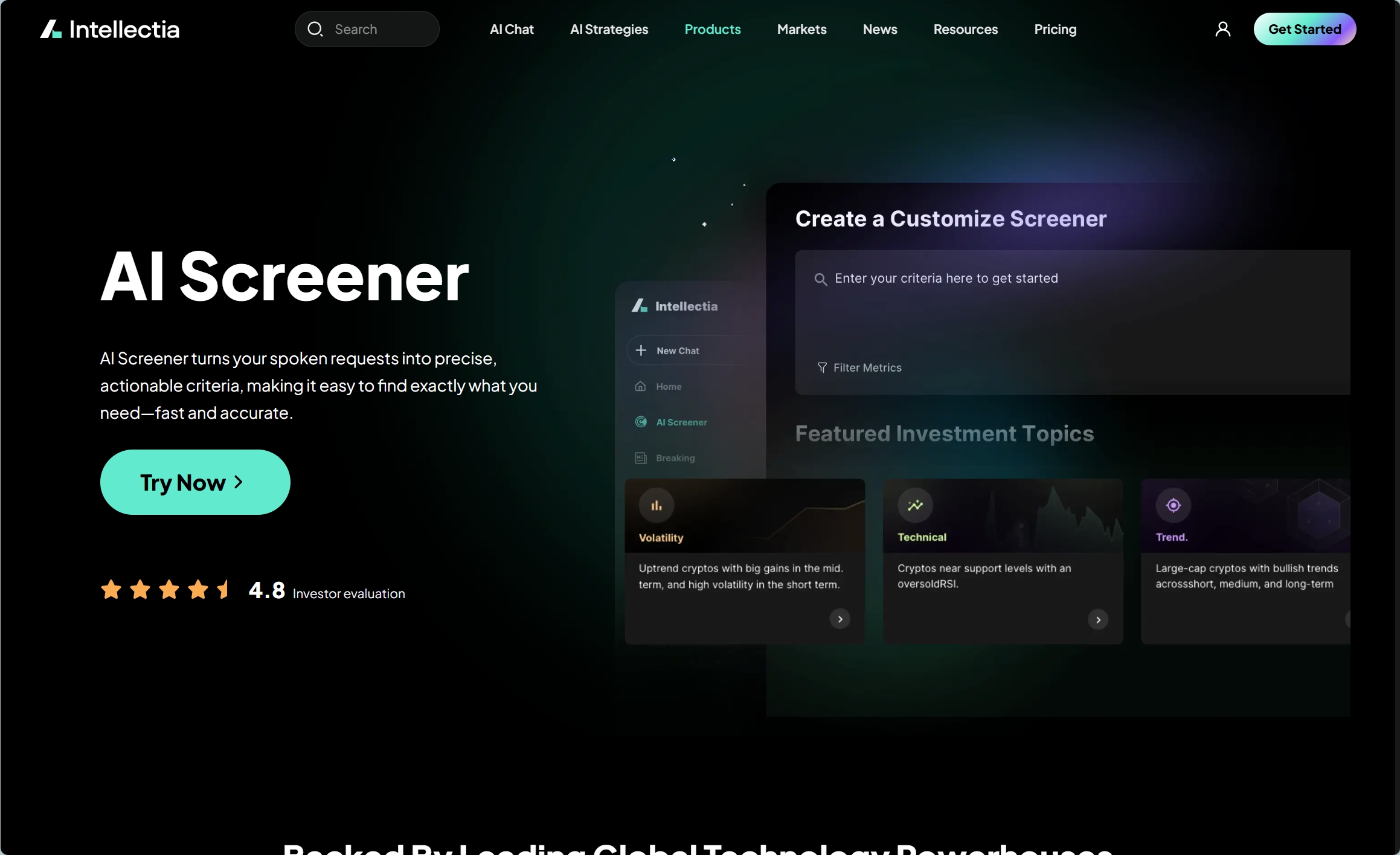
For investors seeking to analyze SPCX alongside other growth opportunities, Intellectia AI's stock screener provides comprehensive screening capabilities to identify companies with similar risk-return profiles and growth trajectories.
Conclusion: The Final Frontier of Investing
SpaceX's historic IPO marks a watershed moment for both the space industry and public markets. The company's trillion valuation reflects genuine achievements in reusable rocketry, satellite communications, and the creation of a vertically integrated space infrastructure platform. At the same time, this valuation embeds extraordinary assumptions about future growth and profitability that may or may not materialize.
Investors considering SPCX must embrace uncertainty. SpaceX is simultaneously a mature launch services provider, a rapidly growing satellite internet company, and a speculative bet on AI infrastructure and multi-planetary civilization. This complexity defies simple valuation models and requires comfort with ambiguity.
The coming months will test SpaceX's ability to justify its premium as lockup expirations increase supply and quarterly earnings reports provide clearer pictures of the company's financial trajectory. Long-term success depends on execution across Starlink expansion, Starship development, and AI infrastructure initiatives—any of which could face delays or setbacks.
For those who believe in Elon Musk's vision and can withstand significant volatility, SpaceX offers exposure to transformative technologies with potentially massive payoffs. For more conservative investors, watching from the sidelines until valuation multiples compress and profitability emerges may be the wiser course. Either way, SpaceX has fundamentally altered the investment landscape, proving that the final frontier is now accessible to public market investors.
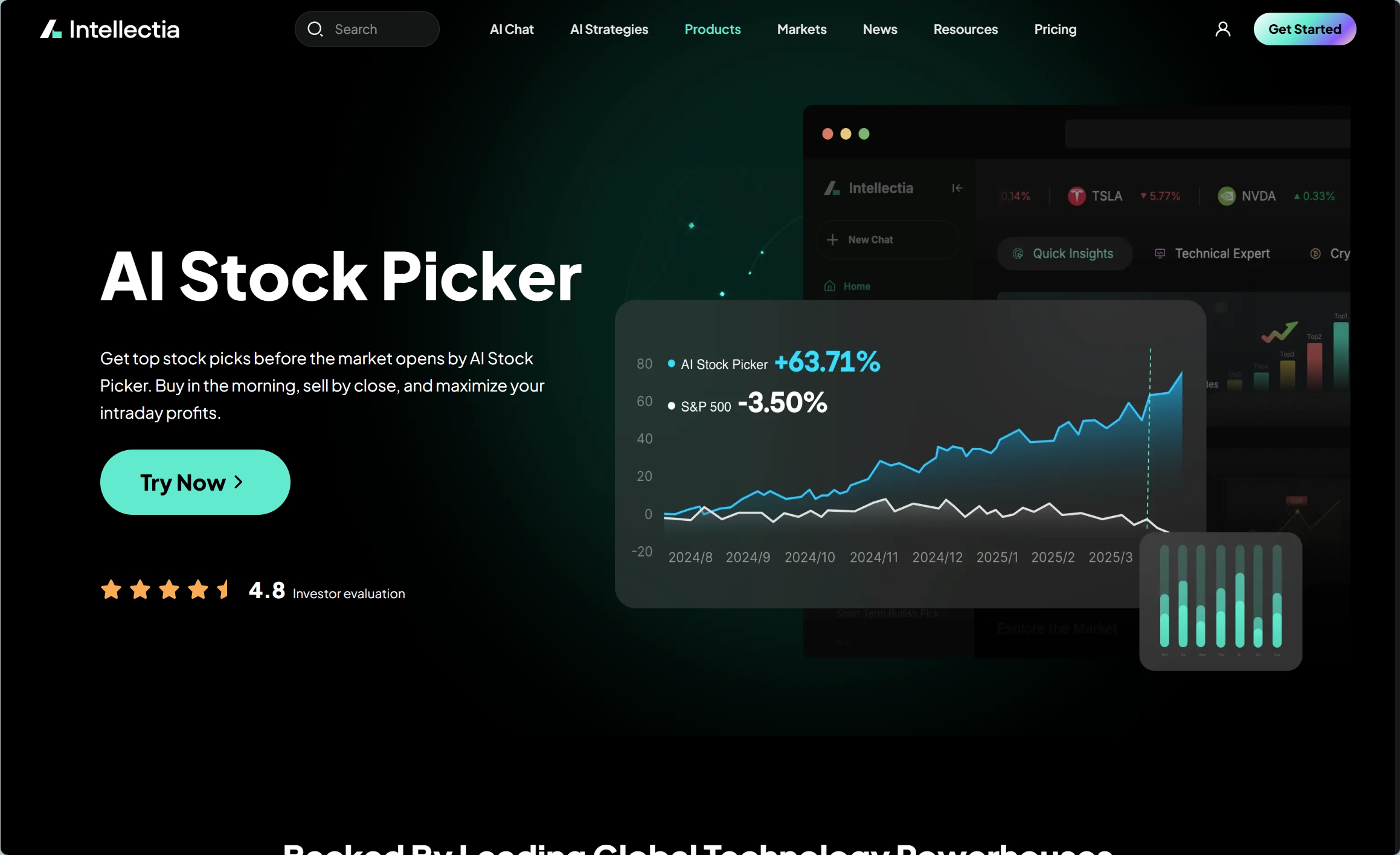
Ready to explore more investment opportunities in emerging technology sectors? Sign up for Intellectia AI to access AI-powered stock analysis, portfolio optimization tools, and real-time market insights that help you navigate the complexities of modern investing.