BioXcel Submits sNDA for IGALMI® in At-Home Treatment
Written by Emily J. Thompson, Senior Investment Analyst
Updated: Mar 27 2026
0mins
Source: Newsfilter
- At-Home Treatment Application: BioXcel submitted a supplemental New Drug Application (sNDA) to the FDA in January 2026 for IGALMI® to expand its indication for treating acute agitation associated with bipolar disorders and schizophrenia in the at-home setting, with potential approval as early as year-end 2026, thereby addressing a significant market gap and enhancing the company's competitive position in mental health.
- Market Opportunity Assessment: The company confirmed the substantial market potential for IGALMI in the at-home treatment space through a third-party market assessment, revealing up to 86 million annual episodes of acute agitation that may require treatment, which strongly supports BioXcel's commercial strategy and is expected to drive future revenue growth.
- Commercial Preparation Progress: BioXcel appointed Mark Pavao as Interim Chief Commercial Officer to lead the launch plans for IGALMI in the at-home setting, indicating the company's commitment to capitalizing on market opportunities and enhancing brand awareness and market penetration through effective commercial strategies.
- Financial Performance Review: In Q4 2025, IGALMI generated net revenue of $256,000, down from $366,000 in Q4 2024; nevertheless, the company is actively advancing IGALMI's market promotion and brand maintenance to tackle future market challenges.
Trade with 70% Backtested Accuracy
Stop guessing "Should I Buy BTAI?" and start using high-conviction signals backed by rigorous historical data.
Sign up today to access powerful investing tools and make smarter, data-driven decisions.
Analyst Views on BTAI
Wall Street analysts forecast BTAI stock price to rise
2 Analyst Rating
1 Buy
0 Hold
1 Sell
Hold
Current: 1.040

Low
1.00
Averages
5.50
High
10.00
Current: 1.040
Low
1.00
Averages
5.50
High
10.00
About BTAI
BioXcel Therapeutics, Inc. is a biopharmaceutical company utilizing artificial intelligence to develop medicines in neuroscience. Its subsidiary, OnkosXcel Therapeutics LLC, is focused on the development of medicines in immuno-oncology. Its advanced neuroscience candidate, BXCL501, is an investigational, orally dissolving film formulation of dexmedetomidine in development for the treatment of agitation associated with psychiatric and neurological disorders. It is continuing to develop BXCL501 for the potential acute treatment of agitation associated with bipolar disorder or schizophrenia in the at-home setting and for the potential acute treatment of agitation (non-daily) associated with dementia due to probable Alzheimer’s disease in the at-home setting and in care facilities. Its advanced immuno-oncology candidate, BXCL701, is an investigational oral innate immune activator for the treatment of aggressive forms of prostate cancer, pancreatic cancer, and other solid and liquid tumors.
About the author

Emily J. Thompson
Emily J. Thompson, a Chartered Financial Analyst (CFA) with 12 years in investment research, graduated with honors from the Wharton School. Specializing in industrial and technology stocks, she provides in-depth analysis for Intellectia’s earnings and market brief reports.

Intense Competition in India's 15-Minute Delivery Market


- Market Share Battle: Quick commerce services in India are projected to account for nearly 40% of online retail sales by 2030, prompting giants like Amazon and Flipkart to intensify their investments to remain relevant.
- Amazon's Expansion Plans: Amazon aims to launch its Amazon Now service across over 300 cities in India, offering up to 25% cashback on the first five orders to rapidly onboard customers and enhance service adoption.
- Flipkart's Quick Service: Flipkart's Minutes service boasts over 1,000 micro-fulfillment centers across more than 130 cities, demonstrating strong growth momentum in the quick commerce market, particularly outside metro areas.
- Blinkit's Profitability: Blinkit stands out as the only quick commerce platform to achieve operational profitability, reporting an adjusted EBITDA of 370 million rupees, indicating its sustainability in a fiercely competitive landscape.
See More

India's Unique Position in the Global AI Race

- Labor Force Advantage: India, with the world's second-largest workforce, is seen as lagging in the global AI race compared to the US and China; however, its low labor costs enable data collection and robot training, which is expected to drive rapid growth in related industries.
- Data Collection Market: As the robot market is projected to grow to $200 billion in the next decade, Indian companies are quickly emerging to meet contract demands from the US and China, although increased competition has halved data collection prices.
- Technological Innovation: Neocambrian AI launched a robotics data factory in Noida, aiming to collect 100 million hours of video data to enhance robot dexterity, showcasing India's potential in developing operating systems for robots.
- Market Transformation: Humyn Labs focuses on data conversion, planning to transition from data collectors to data owners, emphasizing India's significant role in the global human labor marketplace, akin to its success in the information technology sector.
See More
India's AI Strategy Faces Significant Challenges Amid U.S. Restrictions
- AI Dependency Exposed: With 41% of Indian workers using AI nearly every day, compared to 26% in China and 19% in the U.S., the lack of a sovereign AI infrastructure highlights India's reliance on foreign technology, which undermines its competitive position in the global AI landscape.
- Insufficient Investment: Although Indian startups raised $10.5 billion last year, most funding went to enterprise applications, retail, and fintech, leaving deep-tech companies underfunded and limiting their capacity for technological innovation and development.
- Computing Power Gap: India still lags behind the U.S. and China in producing cutting-edge chips and frontier-scale foundational models, with government initiatives underway to address these issues, yet experts warn that these efforts may be too little, too late to meet market demands.
- Calls for Government Action: Prominent investors are urging the Indian government to increase investment in sovereign AI to tackle the shortages of capital and computing power, stressing that without strong measures, India's competitiveness in the global AI arena will be severely jeopardized.
See More

India's Film Industry Accelerates Generative AI Adoption

- Accelerated AI Adoption: The Indian film industry is rapidly adopting generative AI to meet the rising content demand in its $32 billion media and entertainment sector, particularly under tighter budgets, enhancing production efficiency.
- Successful Case Studies: JioStar's collaboration with Disney on 'Mahabharat: Ek Dharmayudh' garnered 6.5 million views on its launch day, exceeding platform averages by 2.1 times, showcasing AI's potential in expanding narrative boundaries.
- Cost and Time Advantages: The cost of creating animation projects using AI has plummeted from millions to hundreds of dollars, with production timelines reduced from six months to weeks, significantly empowering small teams and lowering industry entry barriers.
- Strong Market Demand: According to Ernst & Young, India's media and entertainment market is projected to reach $32 billion by 2025, growing at 9% annually, indicating a substantial demand for content that drives the industry's accelerated adoption of AI technologies to shorten time-to-market.
See More
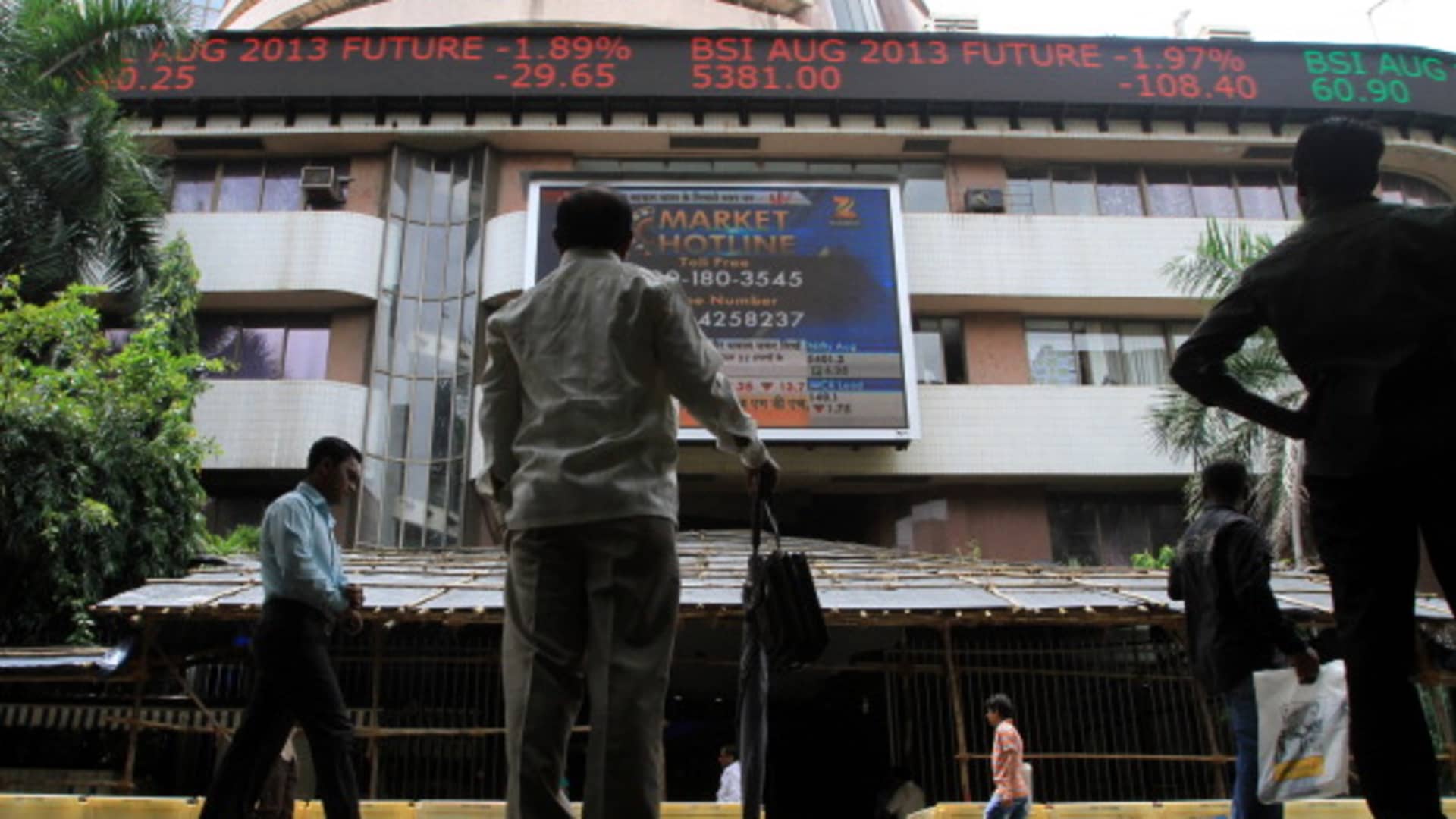
India's Stock Market Faces Pressure from AI Competition
- Foreign Capital Outflow: Since January 2023, foreign investors have sold $27.6 billion worth of Indian equities, significantly surpassing the $18.9 billion sold in 2025, indicating a sharp decline in investor confidence that may lead to reduced future capital inflows.
- Market Ranking Reversal: As of May 2026, India's market capitalization has been surpassed by Taiwan and South Korea, with Taiwan's market cap nearing $5 trillion, forcing India to drop to seventh place, reflecting a diminishing competitive edge in the global market.
- Earnings Forecast Downgrade: Global brokerage Nomura has lowered its consensus earnings estimates for 256 top Indian companies by 4%, primarily due to the impact of the Middle East conflict, highlighting the weakening profitability of Indian firms that could further affect investor sentiment.
- Consumption Story Cracking: Indian households are facing high inflation and currency depreciation, leading to a decline in consumer spending that is expected to slow corporate earnings, with experts suggesting this will negatively impact the long-term growth outlook for the Indian economy.
See More

BioXcel Presents Positive Data for BXCL501 in Agitation Treatment

- Clinical Trial Results: BioXcel Therapeutics presented new data on BXCL501 at the 2026 American Society of Clinical Psychopharmacology Annual Meeting, demonstrating significant efficacy in treating acute agitation associated with bipolar disorders or schizophrenia, particularly in patients experiencing severe agitation episodes.
- Self-Administration Model: During the 12-week trial, patients self-administered the drug during agitation episodes, with results indicating that BXCL501 effectively reduced agitation across all levels of baseline symptom severity, highlighting its potential for at-home use.
- FDA Target Date: The U.S. FDA has set a target action date of November 14, 2026, for the supplemental New Drug Application for BXCL501, which, if approved, would become the first FDA-approved treatment for acute agitation in the home setting, potentially significantly improving patient quality of life.
- Strategic Implications: Dusan Kostic, SVP at BioXcel, stated that these new analyses further strengthen the evidence base for BXCL501 as a treatment option for acute agitation, and approval could provide a crucial opportunity for the company to expand its market presence in mental health.
See More
Intense Competition in India's 15-Minute Delivery Market
- Market Share Battle: Quick commerce services in India are projected to account for nearly 40% of online retail sales by 2030, prompting giants like Amazon and Flipkart to intensify their investments to remain relevant.
- Amazon's Expansion Plans: Amazon aims to launch its Amazon Now service across over 300 cities in India, offering up to 25% cashback on the first five orders to rapidly onboard customers and enhance service adoption.
- Flipkart's Quick Service: Flipkart's Minutes service boasts over 1,000 micro-fulfillment centers across more than 130 cities, demonstrating strong growth momentum in the quick commerce market, particularly outside metro areas.
- Blinkit's Profitability: Blinkit stands out as the only quick commerce platform to achieve operational profitability, reporting an adjusted EBITDA of 370 million rupees, indicating its sustainability in a fiercely competitive landscape.
See More
India's Unique Position in the Global AI Race
- Labor Force Advantage: India, with the world's second-largest workforce, is seen as lagging in the global AI race compared to the US and China; however, its low labor costs enable data collection and robot training, which is expected to drive rapid growth in related industries.
- Data Collection Market: As the robot market is projected to grow to $200 billion in the next decade, Indian companies are quickly emerging to meet contract demands from the US and China, although increased competition has halved data collection prices.
- Technological Innovation: Neocambrian AI launched a robotics data factory in Noida, aiming to collect 100 million hours of video data to enhance robot dexterity, showcasing India's potential in developing operating systems for robots.
- Market Transformation: Humyn Labs focuses on data conversion, planning to transition from data collectors to data owners, emphasizing India's significant role in the global human labor marketplace, akin to its success in the information technology sector.
See More
India's AI Strategy Faces Significant Challenges Amid U.S. Restrictions
- AI Dependency Exposed: With 41% of Indian workers using AI nearly every day, compared to 26% in China and 19% in the U.S., the lack of a sovereign AI infrastructure highlights India's reliance on foreign technology, which undermines its competitive position in the global AI landscape.
- Insufficient Investment: Although Indian startups raised $10.5 billion last year, most funding went to enterprise applications, retail, and fintech, leaving deep-tech companies underfunded and limiting their capacity for technological innovation and development.
- Computing Power Gap: India still lags behind the U.S. and China in producing cutting-edge chips and frontier-scale foundational models, with government initiatives underway to address these issues, yet experts warn that these efforts may be too little, too late to meet market demands.
- Calls for Government Action: Prominent investors are urging the Indian government to increase investment in sovereign AI to tackle the shortages of capital and computing power, stressing that without strong measures, India's competitiveness in the global AI arena will be severely jeopardized.
See More
India's Film Industry Accelerates Generative AI Adoption
- Accelerated AI Adoption: The Indian film industry is rapidly adopting generative AI to meet the rising content demand in its $32 billion media and entertainment sector, particularly under tighter budgets, enhancing production efficiency.
- Successful Case Studies: JioStar's collaboration with Disney on 'Mahabharat: Ek Dharmayudh' garnered 6.5 million views on its launch day, exceeding platform averages by 2.1 times, showcasing AI's potential in expanding narrative boundaries.
- Cost and Time Advantages: The cost of creating animation projects using AI has plummeted from millions to hundreds of dollars, with production timelines reduced from six months to weeks, significantly empowering small teams and lowering industry entry barriers.
- Strong Market Demand: According to Ernst & Young, India's media and entertainment market is projected to reach $32 billion by 2025, growing at 9% annually, indicating a substantial demand for content that drives the industry's accelerated adoption of AI technologies to shorten time-to-market.
See More
India's Stock Market Faces Pressure from AI Competition
- Foreign Capital Outflow: Since January 2023, foreign investors have sold $27.6 billion worth of Indian equities, significantly surpassing the $18.9 billion sold in 2025, indicating a sharp decline in investor confidence that may lead to reduced future capital inflows.
- Market Ranking Reversal: As of May 2026, India's market capitalization has been surpassed by Taiwan and South Korea, with Taiwan's market cap nearing $5 trillion, forcing India to drop to seventh place, reflecting a diminishing competitive edge in the global market.
- Earnings Forecast Downgrade: Global brokerage Nomura has lowered its consensus earnings estimates for 256 top Indian companies by 4%, primarily due to the impact of the Middle East conflict, highlighting the weakening profitability of Indian firms that could further affect investor sentiment.
- Consumption Story Cracking: Indian households are facing high inflation and currency depreciation, leading to a decline in consumer spending that is expected to slow corporate earnings, with experts suggesting this will negatively impact the long-term growth outlook for the Indian economy.
See More
BioXcel Presents Positive Data for BXCL501 in Agitation Treatment
- Clinical Trial Results: BioXcel Therapeutics presented new data on BXCL501 at the 2026 American Society of Clinical Psychopharmacology Annual Meeting, demonstrating significant efficacy in treating acute agitation associated with bipolar disorders or schizophrenia, particularly in patients experiencing severe agitation episodes.
- Self-Administration Model: During the 12-week trial, patients self-administered the drug during agitation episodes, with results indicating that BXCL501 effectively reduced agitation across all levels of baseline symptom severity, highlighting its potential for at-home use.
- FDA Target Date: The U.S. FDA has set a target action date of November 14, 2026, for the supplemental New Drug Application for BXCL501, which, if approved, would become the first FDA-approved treatment for acute agitation in the home setting, potentially significantly improving patient quality of life.
- Strategic Implications: Dusan Kostic, SVP at BioXcel, stated that these new analyses further strengthen the evidence base for BXCL501 as a treatment option for acute agitation, and approval could provide a crucial opportunity for the company to expand its market presence in mental health.
See More