Hedge Funds Shift Focus to Semiconductor Stocks
Written by Emily J. Thompson, Senior Investment Analyst
Updated: May 25 2026
0mins

Source: CNBC
- Investment Trend Shift: According to Goldman Sachs, the weight of semiconductor stocks in hedge fund long portfolios has reached an all-time high, while the weight of software stocks has dropped to its lowest since 2019, indicating strong market confidence in the semiconductor sector.
- Popular Stock Additions: Hedge funds have increased their positions in semiconductor stocks such as Lam Research Corp, Applied Materials Inc, and ASML Holding, while mutual funds have added Intel Corp and SiTime Corp, reflecting a shift in capital towards technology hardware.
- Strong Shared Holdings Performance: Goldman noted that stocks like Boeing Co., Mastercard Inc., Marvell Technology Inc., and Visa Inc. have emerged as popular holdings in both hedge fund and mutual fund portfolios, outperforming the S&P 500 by 3 percentage points with a year-to-date return of 10%.
- Cash Allocation Adjustments: Despite mutual funds raising cash allocations amid rising geopolitical tensions from a record low of 1.1% at the start of 2026 to 1.4% at the beginning of April, cash balances as a share of assets remain extremely low relative to historical levels, reflecting market uncertainty.
Trade with 70% Backtested Accuracy
Stop guessing "Should I Buy ASML?" and start using high-conviction signals backed by rigorous historical data.
Sign up today to access powerful investing tools and make smarter, data-driven decisions.
Analyst Views on ASML
Wall Street analysts forecast ASML stock price to fall
12 Analyst Rating
12 Buy
0 Hold
0 Sell
Strong Buy
Current: 1825.070

Low
1385
Averages
1583
High
1911
Current: 1825.070
Low
1385
Averages
1583
High
1911
About ASML
ASML Holding N.V. is a holding company based in the Netherlands. The Company operates through its subsidiaries in the Netherlands, the United States, Italy, France, Germany, the United Kingdom, Ireland, Belgium, South Korea, Taiwan, Singapore, China, Hong Kong, Japan, Malaysia and Israel. The Company operates through one business segment which is engage in development, production, marketing, sales, upgrading and servicing of advanced semiconductor equipment systems, consisting of lithography, metrology and inspection systems. The Company offers TWINSCAN systems, equipped with lithography system with a mercury lamp as light source (i-line), Krypton Fluoride (KrF) and Argon Fluoride (ArF) light sources for processing wafers for manufacturing environments for which imaging at a small resolution is required. TWINSCAN systems also include immersion lithography systems (TWINSCAN immersion systems).
About the author

Emily J. Thompson
Emily J. Thompson, a Chartered Financial Analyst (CFA) with 12 years in investment research, graduated with honors from the Wharton School. Specializing in industrial and technology stocks, she provides in-depth analysis for Intellectia’s earnings and market brief reports.

Samsung Reports Strong Q2 Profits but Stock Declines

- Samsung's Strong Performance: Samsung reported a doubling of sales year-over-year in Q2, with profits soaring to $58.4 billion; however, investor concerns over future factory expansions led to a decline in its stock price.
- ASML Stock Fluctuation: ASML's stock dropped 4.6% due to Samsung's performance, yet Morgan Stanley analyst raised its price target by 10% to €1,830 ($2,091), indicating optimism about future sales.
- Market Demand Forecast: Analyst David Dai predicts ASML will sell 91 and 113 semiconductor manufacturing machines in 2027 and 2028, respectively, at higher prices than this year, with projected revenue reaching €42.7 billion ($48.8 billion) by 2030, reflecting a 30% annual growth rate.
- AI Market Impact: Despite investor unease regarding Samsung's factory expansions, ASML's long-term outlook remains positive due to the ongoing growth in the artificial intelligence market, which is expected to drive continued sales growth.
See More

Goldman Sachs Advises Focus on HALO Stocks


- Definition of HALO Stocks: Goldman Sachs defines HALO stocks as those of companies with 'heavy assets and low obsolescence risk,' highlighting a market shift towards tangible productive assets amid higher real yields and geopolitical fragmentation.
- Capital Expenditure Trends: Key areas such as data centers, semiconductors, utilities, and defense are expected to account for over 40% of global capital expenditure, indicating that capital-intensive companies are favored for their capacity and infrastructure complexity, driving growth in these sectors.
- Investment Themes Focus: Goldman recommends focusing on five themes: infrastructure, basic materials, aerospace and defense, manufacturing, and consumer platforms, with buy-rated stocks including Enel, Airbus, and Volvo, reflecting strong investment confidence in these areas.
- Global Trend: Goldman emphasizes that the HALO framework is not limited to Europe but represents a global trend, replicated in the US, Asia-Pacific, Japan, and emerging markets, indicating widespread interest in investment opportunities in businesses with hard-to-replace physical assets.
See More

US Stocks Close Lower as Chipmakers Weigh on Market


- Market Decline: On Tuesday, the S&P 500 index fell by 0.45%, the Dow Jones Industrial Average dropped by 0.25%, and the Nasdaq 100 index decreased by 1.77%, indicating a broader market decline under pressure from a selloff in chipmakers, reflecting investor concerns over high valuations.
- Samsung's Earnings Disappointment: Despite Samsung Electronics reporting a 19-fold profit surge, its stock plummeted over 8% in South Korea, suggesting market skepticism regarding the future profitability of the semiconductor sector, which could impact investor confidence in related companies.
- Geopolitical Risks Heightened: Crude oil prices surged to a 1.5-week high due to attacks on shipping in the Strait of Hormuz, raising inflation expectations and pushing bond yields higher, with the 10-year T-note yield reaching a 3.5-week high of 4.54%, adding uncertainty to the market.
- Strength in Software Stocks: Despite the overall market pressure, strong performance in software stocks indicates a rotation of funds into other sectors, with companies like Workday seeing stock price increases of over 4%, providing some support for the market.
See More
ASML Stock Drops Despite Positive Analyst Upgrades
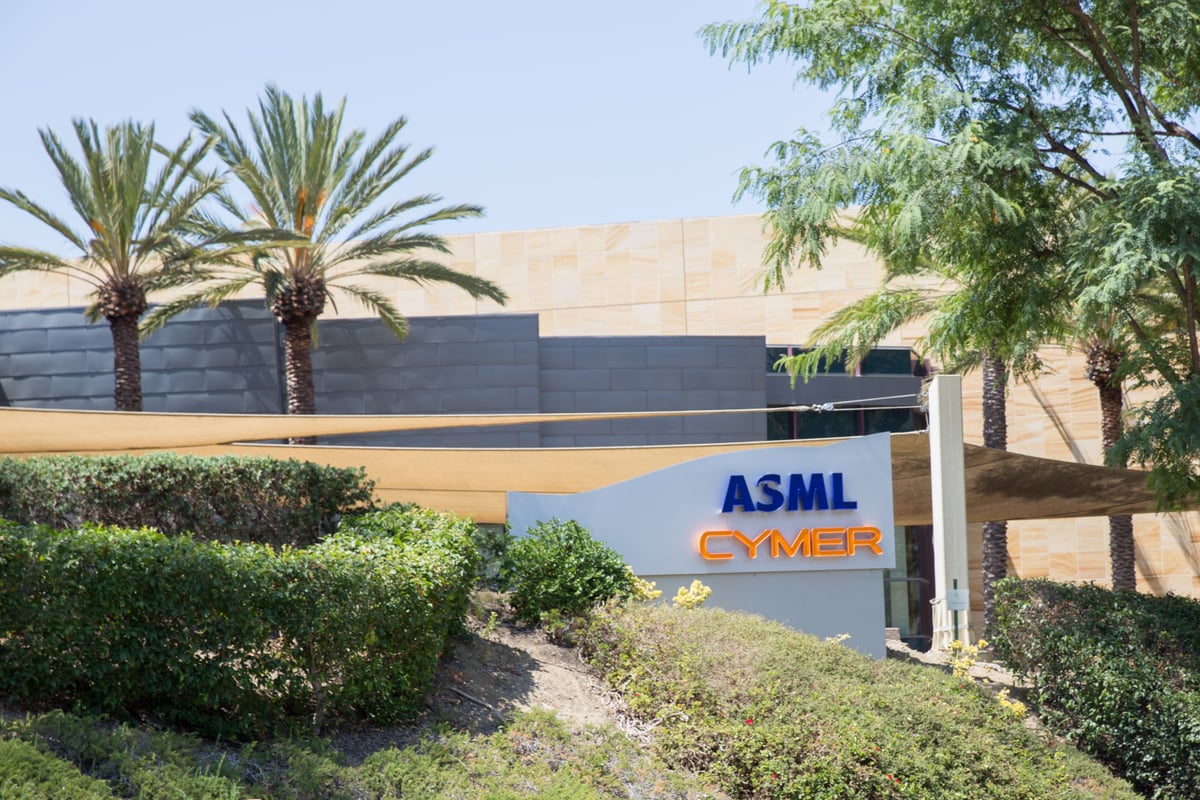
- Analyst Upgrades: Morgan Stanley's Lee Simpson raised ASML's price target by 10% to €1,830 ($2,091), reflecting optimism about the company's future growth, particularly amid a surge in AI-driven semiconductor demand.
- Sales Forecast: Bernstein's David Dai predicts ASML will sell 91 machines in 2027 and 113 in 2028, with prices expected to exceed this year's, indicating robust demand for advanced logic and DRAM capacity.
- Revenue Growth Outlook: Dai anticipates ASML's revenue will grow at a 30% annual rate, reaching €42.7 billion ($48.8 billion) by 2030, significantly enhancing the company's market position and financial health.
- Samsung's Impact: Despite ASML's strong fundamentals, its stock fell 4.6% due to Samsung's Q2 earnings report falling short of expectations, highlighting market sensitivity to short-term fluctuations despite long-term growth potential.
See More

US Stocks Decline as Chipmakers Struggle
- Market Decline: The S&P 500 index fell by 0.67%, the Dow Jones Industrial Average by 0.38%, and the Nasdaq 100 by 2.14%, indicating a bearish market sentiment, particularly driven by a selloff in chipmakers.
- Samsung's Earnings Disappointment: Despite a staggering 19-fold profit increase, Samsung Electronics' stock dropped over 8% in South Korea, reflecting investor concerns over high valuations in the semiconductor sector, which could undermine overall market confidence.
- Rising Oil Prices: Following attacks in the Strait of Hormuz, WTI crude oil prices surged over 2%, raising inflation expectations and pushing bond yields higher, with the 10-year T-note yield reaching a 3.5-week high of 4.52%.
- Widening Trade Deficit: The US trade deficit for May expanded to $77.6 billion, the largest in 14 months, which may negatively impact Q2 GDP, adding to market uncertainties.
See More

Mixed US Stock Performance, Chipmakers Under Pressure

- Divergent Market Performance: The S&P 500 Index is down 0.19% while the Dow Jones Industrial Average is up 0.04%, indicating a mixed market performance, particularly under pressure from chipmakers, which could affect investor confidence.
- Samsung's Earnings Miss Expectations: Despite a 19-fold surge in profits, Samsung Electronics' stock fell over 8% in South Korea, reflecting market concerns over high valuations in the semiconductor sector, potentially prompting investors to reassess their holdings in related stocks.
- Rising Crude Oil Prices: WTI crude oil prices increased by over 1% following attacks on shipping in the Strait of Hormuz, which not only raised inflation expectations but also pushed the 10-year T-note yield to a two-week high of 4.51%, potentially exerting further pressure on the stock market.
- Widening Trade Deficit: The US trade deficit widened to $77.6 billion in May, the largest in 14 months, which could negatively impact Q2 GDP, further exacerbating market uncertainties.
See More
Samsung Reports Strong Q2 Profits but Stock Declines
- Samsung's Strong Performance: Samsung reported a doubling of sales year-over-year in Q2, with profits soaring to $58.4 billion; however, investor concerns over future factory expansions led to a decline in its stock price.
- ASML Stock Fluctuation: ASML's stock dropped 4.6% due to Samsung's performance, yet Morgan Stanley analyst raised its price target by 10% to €1,830 ($2,091), indicating optimism about future sales.
- Market Demand Forecast: Analyst David Dai predicts ASML will sell 91 and 113 semiconductor manufacturing machines in 2027 and 2028, respectively, at higher prices than this year, with projected revenue reaching €42.7 billion ($48.8 billion) by 2030, reflecting a 30% annual growth rate.
- AI Market Impact: Despite investor unease regarding Samsung's factory expansions, ASML's long-term outlook remains positive due to the ongoing growth in the artificial intelligence market, which is expected to drive continued sales growth.
See More
Goldman Sachs Advises Focus on HALO Stocks
- Definition of HALO Stocks: Goldman Sachs defines HALO stocks as those of companies with 'heavy assets and low obsolescence risk,' highlighting a market shift towards tangible productive assets amid higher real yields and geopolitical fragmentation.
- Capital Expenditure Trends: Key areas such as data centers, semiconductors, utilities, and defense are expected to account for over 40% of global capital expenditure, indicating that capital-intensive companies are favored for their capacity and infrastructure complexity, driving growth in these sectors.
- Investment Themes Focus: Goldman recommends focusing on five themes: infrastructure, basic materials, aerospace and defense, manufacturing, and consumer platforms, with buy-rated stocks including Enel, Airbus, and Volvo, reflecting strong investment confidence in these areas.
- Global Trend: Goldman emphasizes that the HALO framework is not limited to Europe but represents a global trend, replicated in the US, Asia-Pacific, Japan, and emerging markets, indicating widespread interest in investment opportunities in businesses with hard-to-replace physical assets.
See More
US Stocks Close Lower as Chipmakers Weigh on Market
- Market Decline: On Tuesday, the S&P 500 index fell by 0.45%, the Dow Jones Industrial Average dropped by 0.25%, and the Nasdaq 100 index decreased by 1.77%, indicating a broader market decline under pressure from a selloff in chipmakers, reflecting investor concerns over high valuations.
- Samsung's Earnings Disappointment: Despite Samsung Electronics reporting a 19-fold profit surge, its stock plummeted over 8% in South Korea, suggesting market skepticism regarding the future profitability of the semiconductor sector, which could impact investor confidence in related companies.
- Geopolitical Risks Heightened: Crude oil prices surged to a 1.5-week high due to attacks on shipping in the Strait of Hormuz, raising inflation expectations and pushing bond yields higher, with the 10-year T-note yield reaching a 3.5-week high of 4.54%, adding uncertainty to the market.
- Strength in Software Stocks: Despite the overall market pressure, strong performance in software stocks indicates a rotation of funds into other sectors, with companies like Workday seeing stock price increases of over 4%, providing some support for the market.
See More
ASML Stock Drops Despite Positive Analyst Upgrades
- Analyst Upgrades: Morgan Stanley's Lee Simpson raised ASML's price target by 10% to €1,830 ($2,091), reflecting optimism about the company's future growth, particularly amid a surge in AI-driven semiconductor demand.
- Sales Forecast: Bernstein's David Dai predicts ASML will sell 91 machines in 2027 and 113 in 2028, with prices expected to exceed this year's, indicating robust demand for advanced logic and DRAM capacity.
- Revenue Growth Outlook: Dai anticipates ASML's revenue will grow at a 30% annual rate, reaching €42.7 billion ($48.8 billion) by 2030, significantly enhancing the company's market position and financial health.
- Samsung's Impact: Despite ASML's strong fundamentals, its stock fell 4.6% due to Samsung's Q2 earnings report falling short of expectations, highlighting market sensitivity to short-term fluctuations despite long-term growth potential.
See More
US Stocks Decline as Chipmakers Struggle
- Market Decline: The S&P 500 index fell by 0.67%, the Dow Jones Industrial Average by 0.38%, and the Nasdaq 100 by 2.14%, indicating a bearish market sentiment, particularly driven by a selloff in chipmakers.
- Samsung's Earnings Disappointment: Despite a staggering 19-fold profit increase, Samsung Electronics' stock dropped over 8% in South Korea, reflecting investor concerns over high valuations in the semiconductor sector, which could undermine overall market confidence.
- Rising Oil Prices: Following attacks in the Strait of Hormuz, WTI crude oil prices surged over 2%, raising inflation expectations and pushing bond yields higher, with the 10-year T-note yield reaching a 3.5-week high of 4.52%.
- Widening Trade Deficit: The US trade deficit for May expanded to $77.6 billion, the largest in 14 months, which may negatively impact Q2 GDP, adding to market uncertainties.
See More
Mixed US Stock Performance, Chipmakers Under Pressure
- Divergent Market Performance: The S&P 500 Index is down 0.19% while the Dow Jones Industrial Average is up 0.04%, indicating a mixed market performance, particularly under pressure from chipmakers, which could affect investor confidence.
- Samsung's Earnings Miss Expectations: Despite a 19-fold surge in profits, Samsung Electronics' stock fell over 8% in South Korea, reflecting market concerns over high valuations in the semiconductor sector, potentially prompting investors to reassess their holdings in related stocks.
- Rising Crude Oil Prices: WTI crude oil prices increased by over 1% following attacks on shipping in the Strait of Hormuz, which not only raised inflation expectations but also pushed the 10-year T-note yield to a two-week high of 4.51%, potentially exerting further pressure on the stock market.
- Widening Trade Deficit: The US trade deficit widened to $77.6 billion in May, the largest in 14 months, which could negatively impact Q2 GDP, further exacerbating market uncertainties.
See More