Investment Outlook: Airbnb vs. MGM Resorts
Written by Emily J. Thompson, Senior Investment Analyst
Updated: 5 days ago
0mins
Source: NASDAQ.COM
- Business Model Comparison: Airbnb operates a light-asset model with over 9 million active listings across more than 220 countries, achieving nearly $12.2 billion in revenue for FY 2025, reflecting a robust growth potential in the short-term rental market with a year-over-year increase of approximately 10.3%.
- Financial Health: MGM Resorts reported nearly $17.5 billion in revenue for FY 2025, with a modest year-over-year growth of 1.7%, and a net income of approximately $206.2 million, indicating stability during economic recovery; however, its debt-to-equity ratio of 23.1x limits financial flexibility.
- Legal Risk Challenges: Airbnb faces legal challenges from cities like Los Angeles and Chicago regarding rental regulations and pricing, which could impact its market operations, especially with the EU Short-Term Rental Regulation coming into effect in May 2026.
- Market Competition Landscape: While Airbnb's asset-light model provides strong competitive advantages, MGM Resorts continues to attract significant tourist traffic with its physical assets in Las Vegas and Macau, necessitating careful consideration of both companies' strategies in the ongoing market recovery.
Trade with 70% Backtested Accuracy
Stop guessing "Should I Buy ABNB?" and start using high-conviction signals backed by rigorous historical data.
Sign up today to access powerful investing tools and make smarter, data-driven decisions.
Analyst Views on ABNB
Wall Street analysts forecast ABNB stock price to fall
29 Analyst Rating
12 Buy
16 Hold
1 Sell
Moderate Buy
Current: 147.650

Low
107.00
Averages
144.85
High
180.00
Current: 147.650
Low
107.00
Averages
144.85
High
180.00
About ABNB
Airbnb, Inc. operates a global platform for stays and experiences. The Company’s marketplace model connects hosts and guests online or through mobile devices to book spaces and experiences around the world. The Company has built its platform to onboard new hosts, especially those who previously had not considered hosting. It partners with hosts throughout the process of setting up their listing and provides them with a suite of tools to manage their listings, including scheduling, merchandising, integrated payments, community support, host protection, pricing guidance, and feedback from reviews. Its Website and mobile applications provide its guests with a way to explore a variety of homes and experiences and an easy way to book them. Its technology platform powers its two-sided marketplace and enables its global network of hosts and guests. It owns a trademark portfolio with protection in 220 countries in which it operates for its primary brands, AIRBNB, and its Belo logo.
About the author

Emily J. Thompson
Emily J. Thompson, a Chartered Financial Analyst (CFA) with 12 years in investment research, graduated with honors from the Wharton School. Specializing in industrial and technology stocks, she provides in-depth analysis for Intellectia’s earnings and market brief reports.

U.S. Lawmakers Concerned About Chinese AI Models


- Legislative Concerns: U.S. lawmakers are considering measures to curb the adoption of Chinese AI models by domestic companies, as these models close the performance gap with American rivals while being cheaper, potentially impacting national security and technological leadership.
- Investigation Launched: The House Committee on Homeland Security and the House Select Committee on China have initiated a joint investigation, sending letters to Cursor and Airbnb regarding their use of Chinese AI models, highlighting serious national security concerns.
- Market Competition: Some U.S. tech firms, including Coinbase and Lindy, publicly advocate for using Chinese AI models to reduce costs, reflecting economic pressures that may lead to a decline in market share for American models.
- Policy Challenges: Despite concerns from the Trump administration about the use of Chinese AI models, restricting their adoption faces legal and market challenges, particularly due to the widespread availability of open-source models that could raise First Amendment issues.
See More

US Lawmakers Concerned About Risks of Chinese AI Models

- Legislative Investigation: Two major U.S. House Committees are jointly investigating the rising adoption of Chinese AI models by American companies, particularly as these models close the performance gap with U.S. rivals while being cheaper, posing potential national security threats.
- Security Concerns: Andrew Garbarino, chairman of the House Committee on Homeland Security, highlighted alarming reports that certain Chinese open-weight models can match leading U.S. models in vulnerability discovery and cybersecurity tasks, raising serious concerns amid escalating U.S.-China tech rivalry.
- Government Response Strategy: While some government departments have banned the use of Chinese AI models, U.S. companies are still free to choose them, and the House Committees are examining whether the U.S. has a sufficient open-weight AI strategy to ensure domestic models can compete with cheaper, capable Chinese alternatives.
- Potential Restriction Measures: Experts suggest that the government may consider federal procurement bans to restrict the use of Chinese AI models, although the difficulty of a complete ban is compounded by the availability of these models' open-source code online, which could raise First Amendment issues.
See More

Investment Comparison: Airbnb vs. MGM Resorts

- Airbnb Market Advantage: Airbnb connects over 5 million hosts with 8 million active listings globally, achieving nearly $12.2 billion in revenue for FY 2025, reflecting a 10.3% year-over-year growth that underscores its strong position in the short-term rental market, while its asset-light model mitigates operational risks.
- MGM Financial Status: MGM Resorts International reported nearly $17.5 billion in revenue for FY 2025, with a modest 1.7% year-over-year increase; however, its net income of approximately $206.2 million represents a significant decline from the previous year, indicating financial pressures amid a competitive landscape.
- Risks and Challenges: Airbnb faces legal challenges from cities like Los Angeles and Chicago, which could impact its operational flexibility, while MGM's debt-to-equity ratio of approximately 23.1x limits its liquidity and operational flexibility during economic downturns, posing significant risks.
- Valuation Comparison: Although MGM's price-to-sales ratio is significantly lower than Airbnb's (0.7x vs. 7.1x), both companies exhibit similar forward P/E ratios of 28.7x and 27.9x, respectively, indicating market optimism regarding Airbnb's future earnings potential despite its higher valuation.
See More
Investment Outlook: Airbnb vs. MGM Resorts
- Business Model Comparison: Airbnb operates a light-asset model with over 9 million active listings across more than 220 countries, achieving nearly $12.2 billion in revenue for FY 2025, reflecting a robust growth potential in the short-term rental market with a year-over-year increase of approximately 10.3%.
- Financial Health: MGM Resorts reported nearly $17.5 billion in revenue for FY 2025, with a modest year-over-year growth of 1.7%, and a net income of approximately $206.2 million, indicating stability during economic recovery; however, its debt-to-equity ratio of 23.1x limits financial flexibility.
- Legal Risk Challenges: Airbnb faces legal challenges from cities like Los Angeles and Chicago regarding rental regulations and pricing, which could impact its market operations, especially with the EU Short-Term Rental Regulation coming into effect in May 2026.
- Market Competition Landscape: While Airbnb's asset-light model provides strong competitive advantages, MGM Resorts continues to attract significant tourist traffic with its physical assets in Las Vegas and Macau, necessitating careful consideration of both companies' strategies in the ongoing market recovery.
See More
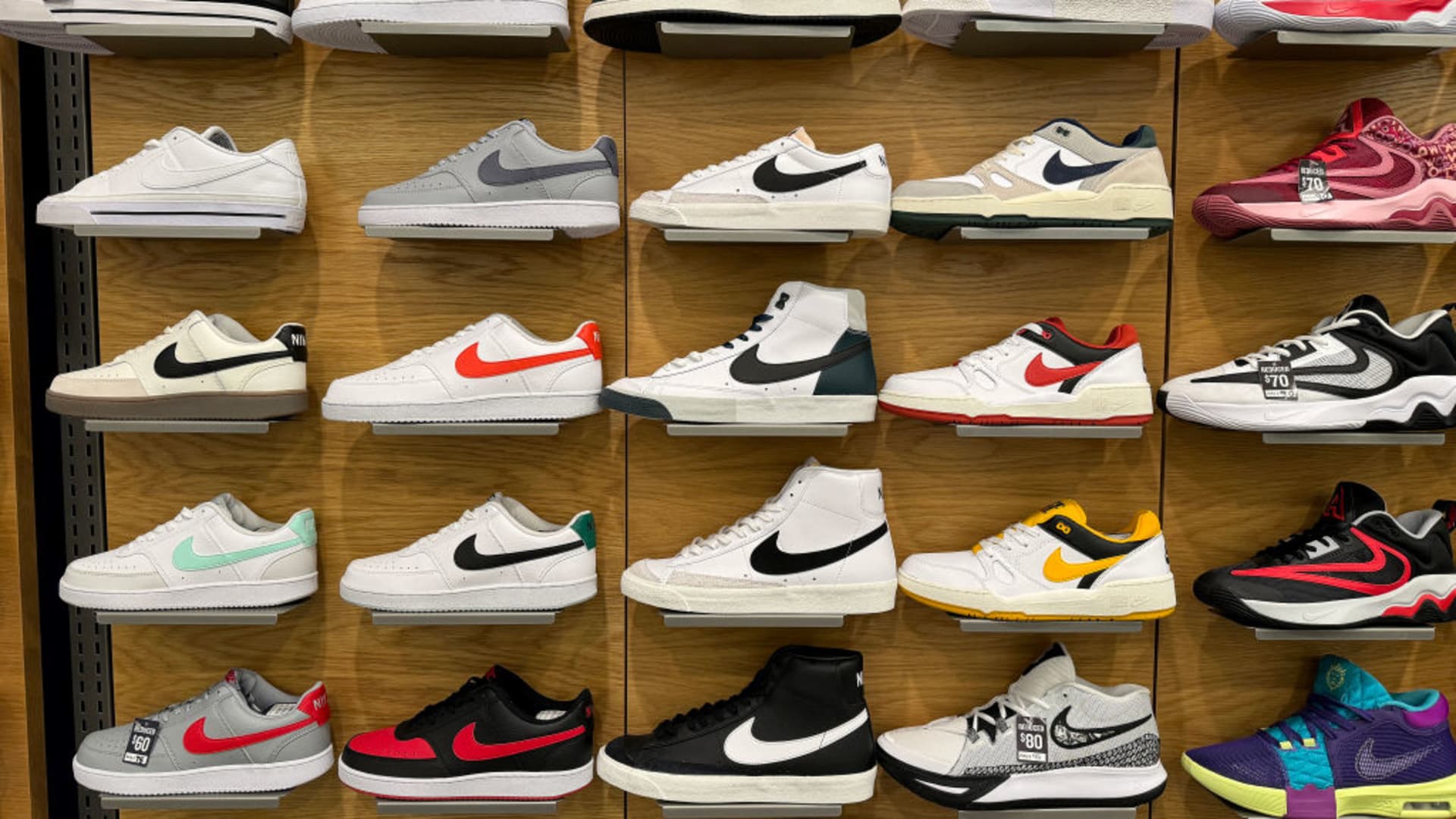
Dow Jones Index Sees Major Component Changes


- Dow Component Changes: Earlier this week, Verizon was removed and Alphabet added to the Dow Jones Industrial Average, marking the 54th adjustment since its inception in 1896, highlighting ongoing market dynamics.
- Nike's Challenges: Following the release of its fiscal Q4 results on June 30, Nike's shares fell below $40, making it the lowest-priced component in the Dow, reflecting its minimal influence amid fierce competition and sales weakness.
- Potential Replacements: Nike is expected to be replaced by either Tesla or Airbnb, with Tesla's electric vehicle segment directly linked to consumer spending and Airbnb connecting to the $11.6 trillion travel industry, enhancing the Dow's diversification.
- Long-Term Growth Potential: Tesla and Airbnb's share prices of $420.60 and $143.10, respectively, significantly exceed Nike's, and both have outperformed Nike in recent years, indicating potential growth opportunities for the Dow moving forward.
See More

Verizon Removed, Alphabet Added to Dow Jones Index
- Index Composition Change: Earlier this week, Verizon was removed from the Dow Jones Industrial Average while Alphabet was added, marking the 54th adjustment since the index's inception in 1896, indicating a growing preference for tech stocks in the market.
- Nike at Risk: With shares dipping below $40, Nike is the only Dow component priced under $113, and ongoing sales weakness coupled with strained relationships with wholesalers diminishes its influence within the index, making it a likely candidate for removal in the next 12 months.
- Potential Replacements: Analysts suggest that Tesla or Airbnb could logically replace Nike, as Tesla's electric vehicle segment directly connects to consumer spending, while Airbnb offers a direct link to the $11.6 trillion travel industry, enhancing the index's diversity.
- Long-Term Growth Potential: With share prices of $420.60 for Tesla and $143.10 for Airbnb, both outperform Nike in recent years, their inclusion in the Dow would provide long-term growth potential and a stronger market influence for the index.
See More
U.S. Lawmakers Concerned About Chinese AI Models
- Legislative Concerns: U.S. lawmakers are considering measures to curb the adoption of Chinese AI models by domestic companies, as these models close the performance gap with American rivals while being cheaper, potentially impacting national security and technological leadership.
- Investigation Launched: The House Committee on Homeland Security and the House Select Committee on China have initiated a joint investigation, sending letters to Cursor and Airbnb regarding their use of Chinese AI models, highlighting serious national security concerns.
- Market Competition: Some U.S. tech firms, including Coinbase and Lindy, publicly advocate for using Chinese AI models to reduce costs, reflecting economic pressures that may lead to a decline in market share for American models.
- Policy Challenges: Despite concerns from the Trump administration about the use of Chinese AI models, restricting their adoption faces legal and market challenges, particularly due to the widespread availability of open-source models that could raise First Amendment issues.
See More
US Lawmakers Concerned About Risks of Chinese AI Models
- Legislative Investigation: Two major U.S. House Committees are jointly investigating the rising adoption of Chinese AI models by American companies, particularly as these models close the performance gap with U.S. rivals while being cheaper, posing potential national security threats.
- Security Concerns: Andrew Garbarino, chairman of the House Committee on Homeland Security, highlighted alarming reports that certain Chinese open-weight models can match leading U.S. models in vulnerability discovery and cybersecurity tasks, raising serious concerns amid escalating U.S.-China tech rivalry.
- Government Response Strategy: While some government departments have banned the use of Chinese AI models, U.S. companies are still free to choose them, and the House Committees are examining whether the U.S. has a sufficient open-weight AI strategy to ensure domestic models can compete with cheaper, capable Chinese alternatives.
- Potential Restriction Measures: Experts suggest that the government may consider federal procurement bans to restrict the use of Chinese AI models, although the difficulty of a complete ban is compounded by the availability of these models' open-source code online, which could raise First Amendment issues.
See More
Investment Comparison: Airbnb vs. MGM Resorts
- Airbnb Market Advantage: Airbnb connects over 5 million hosts with 8 million active listings globally, achieving nearly $12.2 billion in revenue for FY 2025, reflecting a 10.3% year-over-year growth that underscores its strong position in the short-term rental market, while its asset-light model mitigates operational risks.
- MGM Financial Status: MGM Resorts International reported nearly $17.5 billion in revenue for FY 2025, with a modest 1.7% year-over-year increase; however, its net income of approximately $206.2 million represents a significant decline from the previous year, indicating financial pressures amid a competitive landscape.
- Risks and Challenges: Airbnb faces legal challenges from cities like Los Angeles and Chicago, which could impact its operational flexibility, while MGM's debt-to-equity ratio of approximately 23.1x limits its liquidity and operational flexibility during economic downturns, posing significant risks.
- Valuation Comparison: Although MGM's price-to-sales ratio is significantly lower than Airbnb's (0.7x vs. 7.1x), both companies exhibit similar forward P/E ratios of 28.7x and 27.9x, respectively, indicating market optimism regarding Airbnb's future earnings potential despite its higher valuation.
See More
Investment Outlook: Airbnb vs. MGM Resorts
- Business Model Comparison: Airbnb operates a light-asset model with over 9 million active listings across more than 220 countries, achieving nearly $12.2 billion in revenue for FY 2025, reflecting a robust growth potential in the short-term rental market with a year-over-year increase of approximately 10.3%.
- Financial Health: MGM Resorts reported nearly $17.5 billion in revenue for FY 2025, with a modest year-over-year growth of 1.7%, and a net income of approximately $206.2 million, indicating stability during economic recovery; however, its debt-to-equity ratio of 23.1x limits financial flexibility.
- Legal Risk Challenges: Airbnb faces legal challenges from cities like Los Angeles and Chicago regarding rental regulations and pricing, which could impact its market operations, especially with the EU Short-Term Rental Regulation coming into effect in May 2026.
- Market Competition Landscape: While Airbnb's asset-light model provides strong competitive advantages, MGM Resorts continues to attract significant tourist traffic with its physical assets in Las Vegas and Macau, necessitating careful consideration of both companies' strategies in the ongoing market recovery.
See More
Dow Jones Index Sees Major Component Changes
- Dow Component Changes: Earlier this week, Verizon was removed and Alphabet added to the Dow Jones Industrial Average, marking the 54th adjustment since its inception in 1896, highlighting ongoing market dynamics.
- Nike's Challenges: Following the release of its fiscal Q4 results on June 30, Nike's shares fell below $40, making it the lowest-priced component in the Dow, reflecting its minimal influence amid fierce competition and sales weakness.
- Potential Replacements: Nike is expected to be replaced by either Tesla or Airbnb, with Tesla's electric vehicle segment directly linked to consumer spending and Airbnb connecting to the $11.6 trillion travel industry, enhancing the Dow's diversification.
- Long-Term Growth Potential: Tesla and Airbnb's share prices of $420.60 and $143.10, respectively, significantly exceed Nike's, and both have outperformed Nike in recent years, indicating potential growth opportunities for the Dow moving forward.
See More
Verizon Removed, Alphabet Added to Dow Jones Index
- Index Composition Change: Earlier this week, Verizon was removed from the Dow Jones Industrial Average while Alphabet was added, marking the 54th adjustment since the index's inception in 1896, indicating a growing preference for tech stocks in the market.
- Nike at Risk: With shares dipping below $40, Nike is the only Dow component priced under $113, and ongoing sales weakness coupled with strained relationships with wholesalers diminishes its influence within the index, making it a likely candidate for removal in the next 12 months.
- Potential Replacements: Analysts suggest that Tesla or Airbnb could logically replace Nike, as Tesla's electric vehicle segment directly connects to consumer spending, while Airbnb offers a direct link to the $11.6 trillion travel industry, enhancing the index's diversity.
- Long-Term Growth Potential: With share prices of $420.60 for Tesla and $143.10 for Airbnb, both outperform Nike in recent years, their inclusion in the Dow would provide long-term growth potential and a stronger market influence for the index.
See More