U.S. Considers Expanding Nuclear Weapons Deployment to More NATO Countries
Written by Emily J. Thompson, Senior Investment Analyst
Updated: Jun 02 2026
0mins
Source: CNBC
- Nuclear Deployment Expansion: The U.S. is considering expanding its nuclear weapons deployment to more European NATO member states, currently limited to six countries, which could enhance the market outlook for defense companies involved in this sector.
- Interest from Eastern Europe: Countries like Poland and certain Baltic nations may express interest in hosting nuclear-capable bombers, especially following President Trump's pledge to increase troop presence, thereby strengthening their defense capabilities and strategic position within NATO.
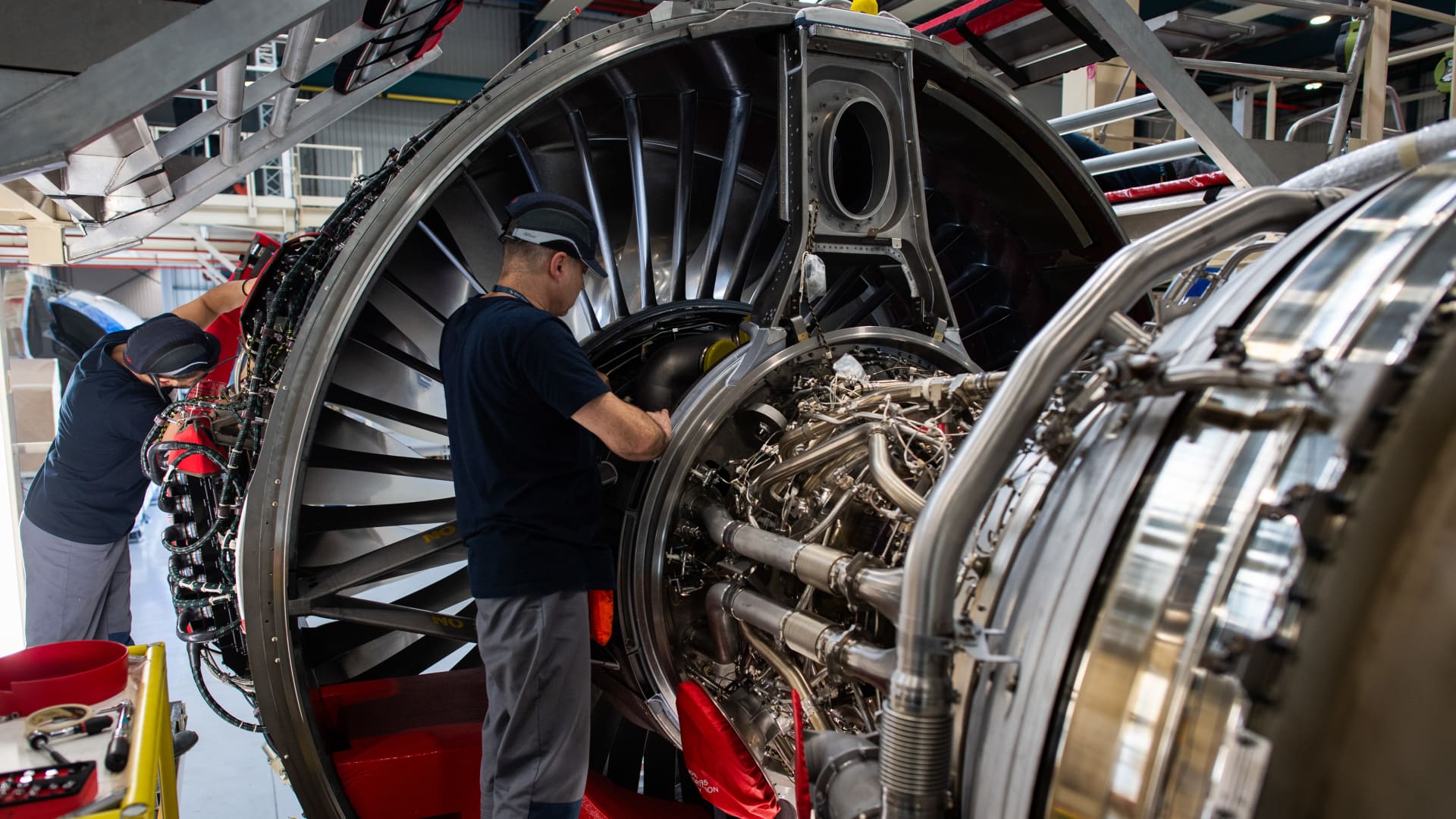
- Increased Defense Spending: As Europe seeks to reduce reliance on the U.S. and boost its defense spending, there is expected to be a surge in demand for dual-capable aircraft like the F-35, which will significantly benefit companies such as BAE Systems, Lockheed Martin, and Rolls-Royce.
- Market Opportunities and Jobs: Analysts indicate that an increase in nuclear weapons deployment will necessitate more dual-capable aircraft, potentially creating numerous new jobs and generating substantial revenue growth for manufacturers, thereby solidifying their positions in the global supply chain.
Trade with 70% Backtested Accuracy
Stop guessing "Should I Buy BA?" and start using high-conviction signals backed by rigorous historical data.
Sign up today to access powerful investing tools and make smarter, data-driven decisions.
Analyst Views on BA
Wall Street analysts forecast BA stock price to rise
16 Analyst Rating
14 Buy
1 Hold
1 Sell
Strong Buy
Current: 234.540

Low
150.00
Averages
269.14
High
298.00
Current: 234.540
Low
150.00
Averages
269.14
High
298.00
About BA
The Boeing Company is an aerospace company. Its segments include Commercial Airplanes (BCA), Defense, Space & Security (BDS), and Global Services (BGS). Its BCA segment develops, produces and markets commercial jet aircraft principally for the commercial airline industry worldwide. Its family of commercial jet aircraft in production includes the 737 narrow-body model and the 767, 777 and 787 wide-body models. Its BDS segment is engaged in the research, development, production and modification of manned and unmanned military aircraft and weapons systems for strike, surveillance and mobility. Its BGS segment provides services to its commercial and defense customers worldwide. It sustains aerospace platforms and systems with a range of products and services, including supply chain and logistics management, engineering, maintenance and modifications, upgrades and conversions, spare parts, pilot and maintenance training systems and services, technical and maintenance documents, and others.
About the author

Emily J. Thompson
Emily J. Thompson, a Chartered Financial Analyst (CFA) with 12 years in investment research, graduated with honors from the Wharton School. Specializing in industrial and technology stocks, she provides in-depth analysis for Intellectia’s earnings and market brief reports.

Boeing Opens Fourth 737 MAX Assembly Line in Washington

- Production Line Expansion: Boeing has launched a fourth 737 MAX assembly line at its Everett, Washington factory to meet strong global demand for jets, which is expected to significantly enhance production capacity.
- Output Increase Plan: Boeing plans to ramp up its monthly 737 production from 42 to 47 jets, although the new assembly line is not expected to contribute to output increases until 2027, laying the groundwork for future growth.
- Factory Scale Advantage: The Everett plant, the largest building in the world by volume, previously housed production for the 747, 767, 777, and 787 models, and the available factory space provides a favorable condition for the expansion of 737 production.
- Long-term Strategic Layout: Boeing CEO Kelly Ortberg stated that the new North Line is a replication of the existing three final assembly lines for the 737, reflecting the company's strategic intent to continuously enhance production capabilities in the coming years.
See More

Trump Criticizes NATO Allies and Reiterates Greenland Issue

- NATO Allies Criticism: Trump criticized NATO allies at the Ankara summit, stating that the U.S. spends excessively to protect them from Russia without receiving adequate returns, indicating strong dissatisfaction that could strain U.S.-NATO relations.
- Strategic Importance of Greenland: Trump reiterated Greenland's significance to the U.S., despite Denmark's Prime Minister rejecting the sale, which may lead to heightened tensions between the U.S. and Denmark and impact U.S. military strategy in the Arctic.
- Trade Relations with Spain: Trump ordered the cessation of all trade with Spain, labeling it a “terrible partner” in NATO, a move that could provoke diplomatic backlash from Spain and affect bilateral economic relations.
- Tough Stance on Iran: Trump declared the memorandum of understanding with Iran “over,” calling them “scum,” a position that may escalate tensions between the U.S. and Iran and influence security dynamics in the Middle East.
See More
Goldman Sachs Advises Focus on HALO Stocks

- Definition of HALO Stocks: Goldman Sachs defines HALO stocks as those of companies with 'heavy assets and low obsolescence risk,' highlighting a market shift towards tangible productive assets amid higher real yields and geopolitical fragmentation.
- Capital Expenditure Trends: Key areas such as data centers, semiconductors, utilities, and defense are expected to account for over 40% of global capital expenditure, indicating that capital-intensive companies are favored for their capacity and infrastructure complexity, driving growth in these sectors.
- Investment Themes Focus: Goldman recommends focusing on five themes: infrastructure, basic materials, aerospace and defense, manufacturing, and consumer platforms, with buy-rated stocks including Enel, Airbus, and Volvo, reflecting strong investment confidence in these areas.
- Global Trend: Goldman emphasizes that the HALO framework is not limited to Europe but represents a global trend, replicated in the US, Asia-Pacific, Japan, and emerging markets, indicating widespread interest in investment opportunities in businesses with hard-to-replace physical assets.
See More

UK's New PM Proposes Power Devolution Plan
- Devolution Proposal: UK's new Prime Minister Andy Burnham has proposed establishing a 'No. 10 North' in Manchester to decentralize government functions, aiming to promote regional economic development, although the plan faces significant skepticism.
- Economic Strategy Coordination: Burnham claims this initiative will serve as a conduit for coordinating economic strategies between national and local governments, helping regions set new growth ambitions, despite critics arguing it is merely superficial reform.
- Local Government Tax Revenue Comparison: According to OECD data, local governments in the UK collected only 5% of tax revenue in 2024, compared to 14% in France and 15% in the U.S., highlighting the centralization issues in the UK that exacerbate regional inequalities.
- Historical Lessons: Burnham's proposals face challenges as past devolution attempts, such as the Scottish and Welsh parliaments, have failed to enhance local governance effectively, with voter turnout rates below the national average reflecting public apathy towards local governance.
See More

Philippine Airlines Poised for Boeing Order After 16 Years

- Boeing Order Resurgence: Philippine Airlines is preparing to announce its first direct order from Boeing since 2007, expected to include about 10 Boeing 787s and 10 Airbus A350s, marking a restoration of direct purchasing ties with Boeing and enhancing its competitive position in the market.
- Market Share Competition: This order will help Boeing maintain a presence in the Philippine market, where currently less than 10% of commercial aircraft are Boeing-built, while Airbus dominates, making a successful order crucial for Boeing's market share recovery.
- Support for Future Growth: The order aligns with Philippine Airlines' $15 billion airport project in Manila, which will support the airline's future growth plans, enhancing its operational capacity and international competitiveness.
- International Expansion Signal: Philippine Airlines' recent entry into the Oneworld global airline alliance, which includes American Airlines Group and IAG, indicates its strategic intent for international market expansion, further strengthening its global business positioning.
See More

SpaceX's IPO Financing and Loss Analysis Post-Launch


- IPO Financing Overview: Space Exploration Technologies raised $86 billion in its IPO and subsequently borrowed an additional $25 billion for refinancing, indicating significant financial pressure following its acquisition of X and xAI.
- Current Losses: In Q1 2026, SpaceX reported a net loss of $4.28 billion, with its xAI division generating $818 million in revenue but incurring $2.47 billion in operating losses, highlighting severe profitability challenges.
- Debt Outlook: Analysts project that SpaceX's net debt could reach $400 billion by 2031, underscoring the immense pressure and potential risks in its future financial management.
- Industry Comparison: In contrast to SpaceX's high-risk, high-debt model, companies like RTX and Heico demonstrate stable revenue growth and profitability, suggesting that robust business models are more attractive in the aerospace sector.
See More
Boeing Opens Fourth 737 MAX Assembly Line in Washington
- Production Line Expansion: Boeing has launched a fourth 737 MAX assembly line at its Everett, Washington factory to meet strong global demand for jets, which is expected to significantly enhance production capacity.
- Output Increase Plan: Boeing plans to ramp up its monthly 737 production from 42 to 47 jets, although the new assembly line is not expected to contribute to output increases until 2027, laying the groundwork for future growth.
- Factory Scale Advantage: The Everett plant, the largest building in the world by volume, previously housed production for the 747, 767, 777, and 787 models, and the available factory space provides a favorable condition for the expansion of 737 production.
- Long-term Strategic Layout: Boeing CEO Kelly Ortberg stated that the new North Line is a replication of the existing three final assembly lines for the 737, reflecting the company's strategic intent to continuously enhance production capabilities in the coming years.
See More
Trump Criticizes NATO Allies and Reiterates Greenland Issue
- NATO Allies Criticism: Trump criticized NATO allies at the Ankara summit, stating that the U.S. spends excessively to protect them from Russia without receiving adequate returns, indicating strong dissatisfaction that could strain U.S.-NATO relations.
- Strategic Importance of Greenland: Trump reiterated Greenland's significance to the U.S., despite Denmark's Prime Minister rejecting the sale, which may lead to heightened tensions between the U.S. and Denmark and impact U.S. military strategy in the Arctic.
- Trade Relations with Spain: Trump ordered the cessation of all trade with Spain, labeling it a “terrible partner” in NATO, a move that could provoke diplomatic backlash from Spain and affect bilateral economic relations.
- Tough Stance on Iran: Trump declared the memorandum of understanding with Iran “over,” calling them “scum,” a position that may escalate tensions between the U.S. and Iran and influence security dynamics in the Middle East.
See More
Goldman Sachs Advises Focus on HALO Stocks
- Definition of HALO Stocks: Goldman Sachs defines HALO stocks as those of companies with 'heavy assets and low obsolescence risk,' highlighting a market shift towards tangible productive assets amid higher real yields and geopolitical fragmentation.
- Capital Expenditure Trends: Key areas such as data centers, semiconductors, utilities, and defense are expected to account for over 40% of global capital expenditure, indicating that capital-intensive companies are favored for their capacity and infrastructure complexity, driving growth in these sectors.
- Investment Themes Focus: Goldman recommends focusing on five themes: infrastructure, basic materials, aerospace and defense, manufacturing, and consumer platforms, with buy-rated stocks including Enel, Airbus, and Volvo, reflecting strong investment confidence in these areas.
- Global Trend: Goldman emphasizes that the HALO framework is not limited to Europe but represents a global trend, replicated in the US, Asia-Pacific, Japan, and emerging markets, indicating widespread interest in investment opportunities in businesses with hard-to-replace physical assets.
See More
UK's New PM Proposes Power Devolution Plan
- Devolution Proposal: UK's new Prime Minister Andy Burnham has proposed establishing a 'No. 10 North' in Manchester to decentralize government functions, aiming to promote regional economic development, although the plan faces significant skepticism.
- Economic Strategy Coordination: Burnham claims this initiative will serve as a conduit for coordinating economic strategies between national and local governments, helping regions set new growth ambitions, despite critics arguing it is merely superficial reform.
- Local Government Tax Revenue Comparison: According to OECD data, local governments in the UK collected only 5% of tax revenue in 2024, compared to 14% in France and 15% in the U.S., highlighting the centralization issues in the UK that exacerbate regional inequalities.
- Historical Lessons: Burnham's proposals face challenges as past devolution attempts, such as the Scottish and Welsh parliaments, have failed to enhance local governance effectively, with voter turnout rates below the national average reflecting public apathy towards local governance.
See More
Philippine Airlines Poised for Boeing Order After 16 Years
- Boeing Order Resurgence: Philippine Airlines is preparing to announce its first direct order from Boeing since 2007, expected to include about 10 Boeing 787s and 10 Airbus A350s, marking a restoration of direct purchasing ties with Boeing and enhancing its competitive position in the market.
- Market Share Competition: This order will help Boeing maintain a presence in the Philippine market, where currently less than 10% of commercial aircraft are Boeing-built, while Airbus dominates, making a successful order crucial for Boeing's market share recovery.
- Support for Future Growth: The order aligns with Philippine Airlines' $15 billion airport project in Manila, which will support the airline's future growth plans, enhancing its operational capacity and international competitiveness.
- International Expansion Signal: Philippine Airlines' recent entry into the Oneworld global airline alliance, which includes American Airlines Group and IAG, indicates its strategic intent for international market expansion, further strengthening its global business positioning.
See More
SpaceX's IPO Financing and Loss Analysis Post-Launch
- IPO Financing Overview: Space Exploration Technologies raised $86 billion in its IPO and subsequently borrowed an additional $25 billion for refinancing, indicating significant financial pressure following its acquisition of X and xAI.
- Current Losses: In Q1 2026, SpaceX reported a net loss of $4.28 billion, with its xAI division generating $818 million in revenue but incurring $2.47 billion in operating losses, highlighting severe profitability challenges.
- Debt Outlook: Analysts project that SpaceX's net debt could reach $400 billion by 2031, underscoring the immense pressure and potential risks in its future financial management.
- Industry Comparison: In contrast to SpaceX's high-risk, high-debt model, companies like RTX and Heico demonstrate stable revenue growth and profitability, suggesting that robust business models are more attractive in the aerospace sector.
See More