

Texas Instruments Announces New CFO Amid Earnings Call Preparation
Texas Instruments Inc. shares fell 5.00% as the stock crossed below its 5-day SMA, reflecting broader market weakness with the Nasdaq-100 down 1.61% and the S&P 500 down 0.30%.
The decline comes amid the announcement that Julie Knecht will succeed Rafael Lizardi as CFO on August 1, following Lizardi's retirement. This leadership change is part of the company's strategy to maintain its focus on disciplined capital allocation and operational goals, as it prepares for its Q2 earnings call on July 22, 2026. The upcoming earnings report is expected to provide insights into the company's financial performance and future outlook, which may influence investor sentiment.
The transition in leadership, coupled with the scheduled earnings call, highlights Texas Instruments' commitment to transparency and investor engagement. However, the current market conditions may pose challenges as the company navigates through this period of change.
Trade with 70% Backtested Accuracy
Analyst Views on TXN

About TXN
About the author


BofA Predicts Cloud and AI Infrastructure Spending to Reach $1.5 Trillion by 2027


- Market Recovery Signal: BofA analysts project that global cloud and AI infrastructure capital expenditure will reach $1.5 trillion by 2027, representing a 40-50% year-over-year increase, indicating that the current 11% pullback after an 88% surge in Q2 is a healthy reset rather than a structural change in AI demand.
- M&A Activity Driving Growth: The analysts noted ongoing consolidation announcements, such as Texas Instruments' acquisition of Silicon Labs and ON Semiconductor's acquisition of Synaptics, which could become a durable theme in the fragmented analog sector, further driving market consolidation and growth.
- Memory Market Outlook: Memory now accounts for 35-40% of cloud AI capex, two to three times historical levels, yet memory stocks trade at subpar multiples; analysts believe the market is underestimating the shift towards longer-duration agreements and more predictable pricing, suggesting that memory will evolve into a strategic enabler for AI.
- Chinese AI Model Competition: Analysts highlighted that Chinese open-weight models like Z.AI's GLM and Alibaba's Qwen have rapidly narrowed the gap with leading U.S. frontier labs, raising competition but also boosting demand for compute, memory, and networking infrastructure, indicating that the future risk lies in model economics rather than semiconductor demand.

Analysis of Retirement Income Growth Strategies

- Income Growth Potential: Starting with a 3.5% yield and assuming an 8% annual growth, a $35,000 income can grow to approximately $140,000 in 20 years, highlighting the critical importance of compounding effects in long-term retirement income.
- High-Yield Risks: High-yield instruments like mortgage REITs may offer substantial initial income, but as principal erodes, retirees will face significant purchasing power loss over a 25-year retirement, underscoring the need for stable growth investments.
- Advantages of Dividend Growth: Companies like Johnson & Johnson and Procter & Gamble have consistently raised dividends over the past decade, achieving 175% and 70 years of dividend growth respectively, demonstrating the effectiveness of dividend growth strategies in long-term investing.
- Capital Requirement Analysis: To achieve an annual income of $60,000, a 3.5% yield requires approximately $1.714 million in capital, while a 12% yield only needs $500,000; although high yields seem attractive, stable growth investments may prove more advantageous in the long run.

Mixed Performance in US Stocks, Led by Chipmakers


- Chipmaker Rally: Chipmakers and AI infrastructure stocks are leading the market today, with the iShares Semiconductor ETF (SOXX) up over 3%, and Advanced Micro Devices (AMD) and Western Digital (WDC) rising more than 9%, indicating a resurgence of confidence in tech stocks that could drive overall market gains.
- Service Sector Expansion: The US June ISM services index fell to 54.0, meeting expectations, and although the pace of growth has slowed, the employment sub-index rose to 51.2, surpassing the expected 48.2, suggesting that companies are still hiring amid easing cost pressures, potentially supporting economic growth.
- Strong Q2 Earnings Outlook: Bloomberg Intelligence forecasts a 23% increase in Q2 earnings, close to Q1's 30% growth, primarily driven by AI spending, which is expected to account for nearly 60% of S&P 500 earnings-per-share growth, providing an optimistic outlook for investors.
- International Market Volatility: While US markets show positive performance, overseas markets are generally declining, with the Euro Stoxx 50 down 0.43%, reflecting global economic uncertainties that may impact investor sentiment.
US Stocks Show Mixed Movement, Led by Chipmakers
- Market Performance: The S&P 500 Index rose by 0.43% and the Nasdaq 100 Index increased by 1.17%, driven by strong performances from chipmakers and AI infrastructure stocks, reflecting heightened investor confidence in technology shares.
- Oil Price Impact: WTI crude oil prices fell by 0.5% as Saudi Arabia and the UAE ramped up shipments to near pre-war levels, which eased inflation expectations and led to a 2 basis point drop in the 10-year T-note yield to 4.46%, providing support for the bond market.
- Earnings Outlook: Bloomberg Intelligence forecasts a 23% increase in Q2 earnings, close to Q1's 30% growth, indicating that AI spending will be a major driver, expected to contribute nearly 60% to the S&P 500's earnings-per-share growth.
- International Market Dynamics: European stock markets are generally down, with Eurozone May retail sales rising 0.2% month-over-month, below the expected 0.3%, while German May factory orders increased by 1.9%, exceeding the expected 1.1%, indicating a mixed economic recovery.

Texas Instruments Appoints New CFO
- Executive Transition: Texas Instruments announced that Julie Knecht will take over as CFO on August 1, succeeding Rafael Lizardi, who is retiring after 25 years, with Lizardi remaining as an advisor until August 31 to ensure a smooth leadership transition.
- Leadership Recognition: Company leaders praised Lizardi's long-term focus on disciplined capital allocation and investments in manufacturing capacity, establishing a solid foundation for the company, while Knecht's appointment is seen as a key to continuing this successful strategy.
- Strategic Commitment: Knecht expressed her commitment to the company's culture and strategy in her appointment, stating she looks forward to building on Texas Instruments' established success, reflecting the company's confidence in future growth.
- Financial Performance Forecast: Texas Instruments is scheduled to announce its Q2 2026 financial results on July 22, maintaining a focus on operational goals and demonstrating its ongoing efforts in semiconductor design and manufacturing.
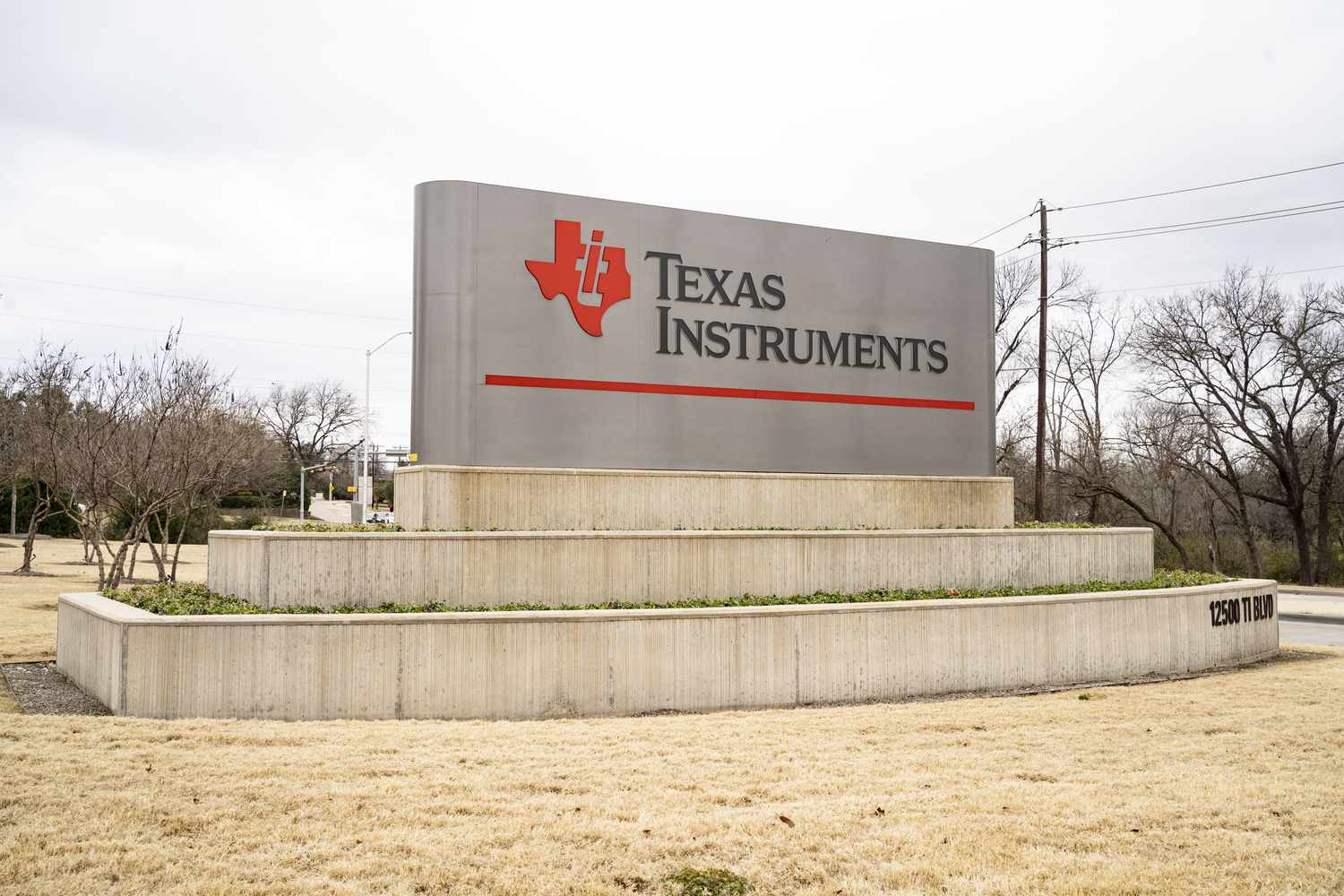
Texas Instruments to Host Q2 Earnings Call
- Earnings Call Schedule: Texas Instruments is set to host its Q2 earnings conference call on July 22, 2026, at 3:30 PM Central Time, where company executives will discuss financial results and address investor questions, aiming to enhance transparency and investor confidence.
- Executive Participation: The call will feature CEO Haviv Ilan, CFO Rafael Lizardi, and VP of Investor Relations Mike Beckman, ensuring investors receive comprehensive insights into financial performance and future outlook.
- Webcast Access: Investors can access the audio webcast through the Investor Relations section of Texas Instruments' website, with an archived recording available shortly after the call concludes, allowing those unable to attend live to catch up on key information.
- Company Background: Texas Instruments is a leading global semiconductor company that designs, manufactures, and sells analog and embedded processing chips for various markets, including industrial and automotive, committed to making electronics more affordable through semiconductor technology.
BofA Predicts Cloud and AI Infrastructure Spending to Reach $1.5 Trillion by 2027
- Market Recovery Signal: BofA analysts project that global cloud and AI infrastructure capital expenditure will reach $1.5 trillion by 2027, representing a 40-50% year-over-year increase, indicating that the current 11% pullback after an 88% surge in Q2 is a healthy reset rather than a structural change in AI demand.
- M&A Activity Driving Growth: The analysts noted ongoing consolidation announcements, such as Texas Instruments' acquisition of Silicon Labs and ON Semiconductor's acquisition of Synaptics, which could become a durable theme in the fragmented analog sector, further driving market consolidation and growth.
- Memory Market Outlook: Memory now accounts for 35-40% of cloud AI capex, two to three times historical levels, yet memory stocks trade at subpar multiples; analysts believe the market is underestimating the shift towards longer-duration agreements and more predictable pricing, suggesting that memory will evolve into a strategic enabler for AI.
- Chinese AI Model Competition: Analysts highlighted that Chinese open-weight models like Z.AI's GLM and Alibaba's Qwen have rapidly narrowed the gap with leading U.S. frontier labs, raising competition but also boosting demand for compute, memory, and networking infrastructure, indicating that the future risk lies in model economics rather than semiconductor demand.
Analysis of Retirement Income Growth Strategies
- Income Growth Potential: Starting with a 3.5% yield and assuming an 8% annual growth, a $35,000 income can grow to approximately $140,000 in 20 years, highlighting the critical importance of compounding effects in long-term retirement income.
- High-Yield Risks: High-yield instruments like mortgage REITs may offer substantial initial income, but as principal erodes, retirees will face significant purchasing power loss over a 25-year retirement, underscoring the need for stable growth investments.
- Advantages of Dividend Growth: Companies like Johnson & Johnson and Procter & Gamble have consistently raised dividends over the past decade, achieving 175% and 70 years of dividend growth respectively, demonstrating the effectiveness of dividend growth strategies in long-term investing.
- Capital Requirement Analysis: To achieve an annual income of $60,000, a 3.5% yield requires approximately $1.714 million in capital, while a 12% yield only needs $500,000; although high yields seem attractive, stable growth investments may prove more advantageous in the long run.
Mixed Performance in US Stocks, Led by Chipmakers
- Chipmaker Rally: Chipmakers and AI infrastructure stocks are leading the market today, with the iShares Semiconductor ETF (SOXX) up over 3%, and Advanced Micro Devices (AMD) and Western Digital (WDC) rising more than 9%, indicating a resurgence of confidence in tech stocks that could drive overall market gains.
- Service Sector Expansion: The US June ISM services index fell to 54.0, meeting expectations, and although the pace of growth has slowed, the employment sub-index rose to 51.2, surpassing the expected 48.2, suggesting that companies are still hiring amid easing cost pressures, potentially supporting economic growth.
- Strong Q2 Earnings Outlook: Bloomberg Intelligence forecasts a 23% increase in Q2 earnings, close to Q1's 30% growth, primarily driven by AI spending, which is expected to account for nearly 60% of S&P 500 earnings-per-share growth, providing an optimistic outlook for investors.
- International Market Volatility: While US markets show positive performance, overseas markets are generally declining, with the Euro Stoxx 50 down 0.43%, reflecting global economic uncertainties that may impact investor sentiment.
US Stocks Show Mixed Movement, Led by Chipmakers
- Market Performance: The S&P 500 Index rose by 0.43% and the Nasdaq 100 Index increased by 1.17%, driven by strong performances from chipmakers and AI infrastructure stocks, reflecting heightened investor confidence in technology shares.
- Oil Price Impact: WTI crude oil prices fell by 0.5% as Saudi Arabia and the UAE ramped up shipments to near pre-war levels, which eased inflation expectations and led to a 2 basis point drop in the 10-year T-note yield to 4.46%, providing support for the bond market.
- Earnings Outlook: Bloomberg Intelligence forecasts a 23% increase in Q2 earnings, close to Q1's 30% growth, indicating that AI spending will be a major driver, expected to contribute nearly 60% to the S&P 500's earnings-per-share growth.
- International Market Dynamics: European stock markets are generally down, with Eurozone May retail sales rising 0.2% month-over-month, below the expected 0.3%, while German May factory orders increased by 1.9%, exceeding the expected 1.1%, indicating a mixed economic recovery.
Texas Instruments Appoints New CFO
- Executive Transition: Texas Instruments announced that Julie Knecht will take over as CFO on August 1, succeeding Rafael Lizardi, who is retiring after 25 years, with Lizardi remaining as an advisor until August 31 to ensure a smooth leadership transition.
- Leadership Recognition: Company leaders praised Lizardi's long-term focus on disciplined capital allocation and investments in manufacturing capacity, establishing a solid foundation for the company, while Knecht's appointment is seen as a key to continuing this successful strategy.
- Strategic Commitment: Knecht expressed her commitment to the company's culture and strategy in her appointment, stating she looks forward to building on Texas Instruments' established success, reflecting the company's confidence in future growth.
- Financial Performance Forecast: Texas Instruments is scheduled to announce its Q2 2026 financial results on July 22, maintaining a focus on operational goals and demonstrating its ongoing efforts in semiconductor design and manufacturing.
Texas Instruments to Host Q2 Earnings Call
- Earnings Call Schedule: Texas Instruments is set to host its Q2 earnings conference call on July 22, 2026, at 3:30 PM Central Time, where company executives will discuss financial results and address investor questions, aiming to enhance transparency and investor confidence.
- Executive Participation: The call will feature CEO Haviv Ilan, CFO Rafael Lizardi, and VP of Investor Relations Mike Beckman, ensuring investors receive comprehensive insights into financial performance and future outlook.
- Webcast Access: Investors can access the audio webcast through the Investor Relations section of Texas Instruments' website, with an archived recording available shortly after the call concludes, allowing those unable to attend live to catch up on key information.
- Company Background: Texas Instruments is a leading global semiconductor company that designs, manufactures, and sells analog and embedded processing chips for various markets, including industrial and automotive, committed to making electronics more affordable through semiconductor technology.





