

Trump Asks OpenAI to Stagger AI Model Release


Catch up on the top industries and stocks that were impacted, or were predicted to be impacted, by the comments, actions and policies of President Trump with this daily recap compiled by The Fly:OPENAI ASKED TO STAGGER RELEASE:The Trump administration has asked OpenAI to stagger the release of its AI model so organizations can first be vetted by the government before receiving access to the tool, George Hammond and Joe Miller of The Financial Times reports. OpenAI currently plans to give two dozen partners access to GPT 5.6, the company's latest AI model, ahead of a broader rollout, but these partners would need to be approved by the government, multiple people with knowledge of the matter told the Times.HOUSING BILL SIGNING CANCELED:On Wednesday, President Donald Trump stated in a post to Truth Social: "Today's Housing News Conference and Signing is hereby cancelled until such time as we pass the desperately needed SAVE AMERICA ACT, which I consider to be a National Emergency. Thank you for your attention to this matter!" Publicly traded homebuilding companies include Beazer Homes, D.R. Horton, Hovnanian, KB Home, Lennar, PulteGroupand Toll Brothers.HONDA'S EV PLEDGE UNRAVELS:Five years ago, Hondapledged by 2040 the company would spend tens of billions of dollars to phase out gas cars in favor of electric vehicles, River Akira Davis of The New York Times reports. This goal, however, has more recently unraveled in a way CEO Toshihiro Mibe has called "heartbreaking." The Trump administration's elimination of federal tax credits for EVs has sapped demand, leading to the company's first annual net loss in its history as a public company. As a result, some senior executives have begun rallying support to urge Mibe to resign and take responsibility for the issues at the company.
Trade with 70% Backtested Accuracy
Analyst Views on HMC
About HMC
About the author

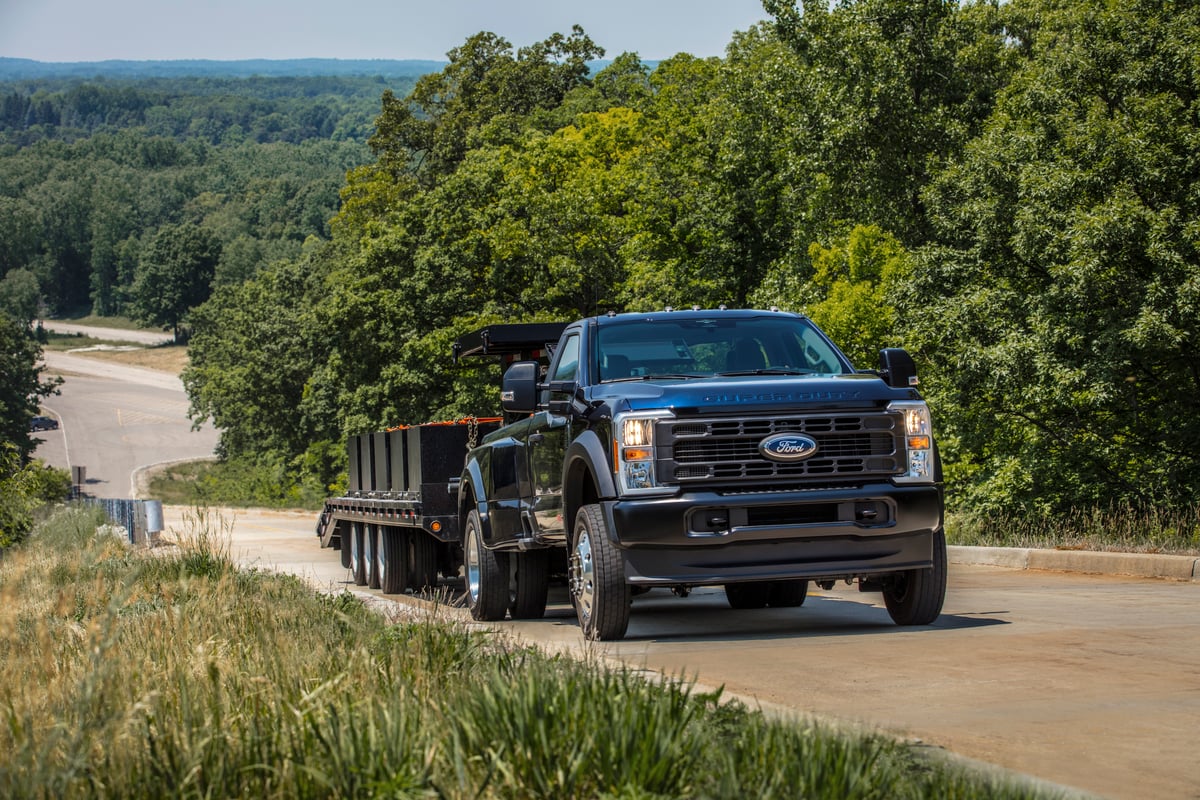
Ford's F-Series Sales Decline Significantly Impacts Business

- Importance of F-Series: Ford's F-Series trucks are estimated to account for one-third of the company's total revenue, with Wall Street estimating that as much as 90% of Ford's net profit comes from this lineup, highlighting its critical impact on Ford's financial health.
- Intensified Sales Competition: In the first half of 2026, Ford's F-150 fell short of Honda's CR-V, which achieved a 19% and 30% sales increase in May and June respectively, totaling 226,114 units, indicating the fierce competition in the market.
- Production Challenges: Two supplier fires last fall severely impacted Ford's aluminum supply, leading to reduced production capacity for the F-150, with expected EBIT losses of $1.5 billion to $2 billion in 2026, forcing management to adjust earnings guidance.
- Response Strategy: Ford plans to offset about $1 billion of the losses by adding production shifts, but despite these challenges, the company must focus on whether it can recover production in the second half of the year to maintain investor confidence and market share.

Ford F-150 Sales Hit by Supply Issues Amid Rising Competition
- Supply Chain Crisis: Ford's F-150 production has been severely impacted by two supplier fires leading to aluminum shortages, with first-half 2026 sales expected to fall short of 210,000 units, significantly lagging behind Honda's CR-V at 226,114 units, highlighting Ford's vulnerability during a traditionally strong selling season.
- Intensifying Market Competition: Honda's CR-V achieved sales increases of 19% and 30% in the first half of 2026, successfully overtaking the Ford F-150, reflecting the pressure on Ford's market share, especially when its core product line is underperforming.
- Significant Financial Impact: Ford anticipates a loss of $1.5 billion to $2 billion in earnings before interest and taxes (EBIT) due to production issues, although it plans to offset about $1 billion of that loss by adding shifts, yet the overall financial outlook remains bleak.
- Long-term Strategic Challenges: The F-150's decline in sales, a model that has rarely lost its leading position over the past 15 years, not only undermines investor confidence but also poses serious challenges to Ford's future market strategy and product planning.

QuantumScape Advances Solid-State Battery Technology Amid EV Market Challenges

- Technological Milestones: QuantumScape achieved significant commercialization progress in 2025, and despite a 27.4% stock drop in the first half of 2026, its partnership with Honda could expand solid-state battery applications, enhancing market competitiveness.
- Market Opportunities: Beyond electric vehicles, QuantumScape is targeting energy storage solutions for AI factories, showcasing the broad application potential of its solid-state battery technology, which may attract more investor interest.
- Risk Factors: Although technological milestones have reduced investment risks, QuantumScape's market cap remains at $4.3 billion, prompting investors to carefully assess their allocation in speculative portfolios.
- Industry Competition: QuantumScape is not the only company pursuing opportunities in the solid-state battery market, and increasing competition within the industry could impact its market share and future growth potential.

QuantumScape's Battery Technology Progress Amid Stock Volatility
- Technological Milestones: QuantumScape has made significant strides by securing an expanded development and licensing agreement with Volkswagen's battery maker PowerCo, marking a crucial step toward commercializing its solid-state battery technology, despite a 27.4% stock drop in the first half of 2026.
- Partnerships Established: The company has formed partnerships with glass manufacturer Corning and Murata Manufacturing to achieve high-volume production of its ceramic separators, further advancing the practical application of its technology in the market.
- Market Opportunities: QuantumScape's solid-state batteries are expected to offer greater energy density and faster charging times, with plans to extend applications beyond electric vehicles to include power equipment, indicating a broad market potential.
- Investment Risks: While technological milestones have reduced investment risks, the nearly 30% drop in stock price still warrants caution from investors, suggesting that only a speculative portion of their portfolio should be allocated to QuantumScape.

Nissan and Honda Explore Potential Partnership Opportunities
- Collaboration Projects: Nissan CEO Ivan Espinosa indicated that Nissan and Honda are actively exploring joint projects aimed at addressing both companies' capacity needs in the U.S. market, thereby enhancing their collaborative potential in a competitive automotive landscape.
- Investment in Technology: The discussions include the need for investments in hardware for electric architectures, particularly regarding battery capacity for future hybrid models to meet the increasing market demand, ensuring technological foresight and market adaptability.
- Software Platform Integration: Nissan and Honda are also considering the establishment of a common software platform to improve product compatibility and technological integration, positioning themselves favorably in the future development of automotive technologies.
- Positive Collaboration Outlook: Espinosa emphasized that the discussions are very constructive, with related partnership news expected to be announced soon, reflecting Nissan and Honda's proactive stance and potential market opportunities for future collaboration.
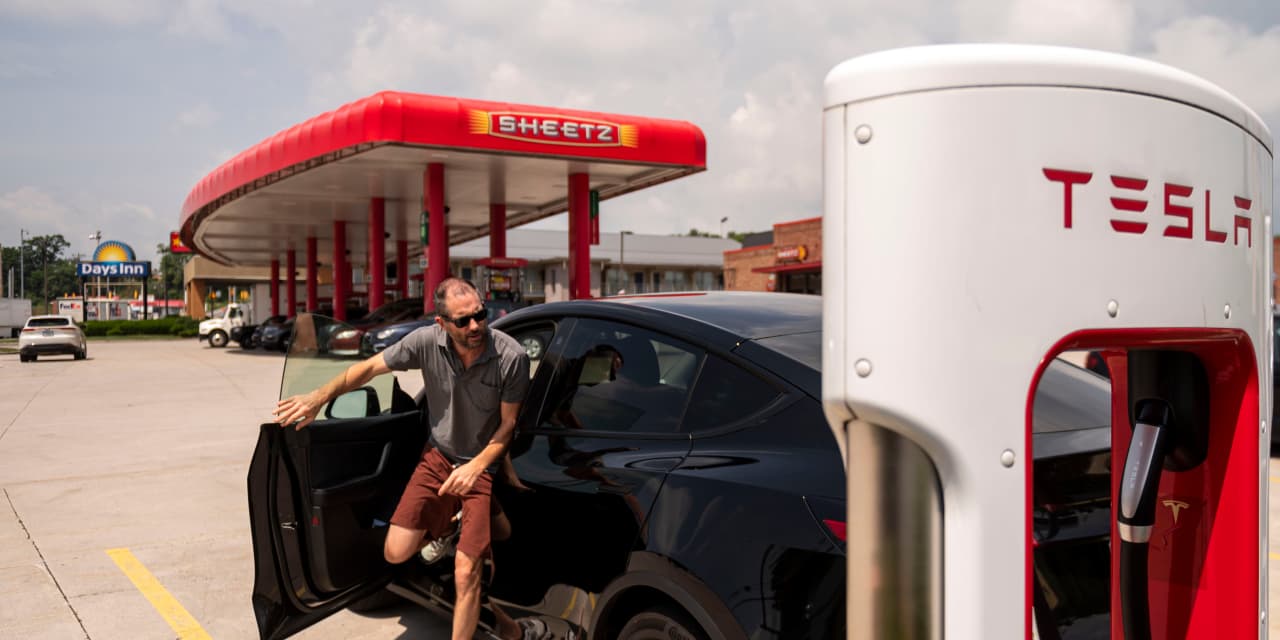
Ford Reports 10.3% Drop in Q2 US Sales Amid EV Demand Decline

- Sales Decline: Ford's Q2 US sales fell 10.3% to 549,200 vehicles, primarily due to weak electric vehicle demand and declines in F-Series and SUV volumes, resulting in a 9.6% year-over-year drop in first-half sales to just over 1 million, indicating increasing market competition pressures.
- Weak EV Sales: Ford's electric vehicle sales plummeted 40.7% in Q2 to 9,746 units, with the Mustang Mach-E down 30.9% and the discontinued F-150 Lightning down 58.6%, reflecting an overall slump in the EV market and posing challenges to Ford's market share in this segment.
- F-Series Performance Issues: The F-Series, America's best-selling truck, saw an 11% drop in Q2 sales to 197,900 units and a 13.3% decline in the first half, with Ford attributing this to a retiming of commercial production rather than demand weakness, although it still outsold the Chevrolet Silverado by over 80,000 trucks.
- New Model Plans: Ford is retooling its Louisville Assembly Plant to launch an affordable small electric pickup priced under $30,000 next year, with CEO Farley emphasizing that this model will cater to multiple market needs and is expected to drive future sales growth.
Ford's F-Series Sales Decline Significantly Impacts Business
- Importance of F-Series: Ford's F-Series trucks are estimated to account for one-third of the company's total revenue, with Wall Street estimating that as much as 90% of Ford's net profit comes from this lineup, highlighting its critical impact on Ford's financial health.
- Intensified Sales Competition: In the first half of 2026, Ford's F-150 fell short of Honda's CR-V, which achieved a 19% and 30% sales increase in May and June respectively, totaling 226,114 units, indicating the fierce competition in the market.
- Production Challenges: Two supplier fires last fall severely impacted Ford's aluminum supply, leading to reduced production capacity for the F-150, with expected EBIT losses of $1.5 billion to $2 billion in 2026, forcing management to adjust earnings guidance.
- Response Strategy: Ford plans to offset about $1 billion of the losses by adding production shifts, but despite these challenges, the company must focus on whether it can recover production in the second half of the year to maintain investor confidence and market share.
Ford F-150 Sales Hit by Supply Issues Amid Rising Competition
- Supply Chain Crisis: Ford's F-150 production has been severely impacted by two supplier fires leading to aluminum shortages, with first-half 2026 sales expected to fall short of 210,000 units, significantly lagging behind Honda's CR-V at 226,114 units, highlighting Ford's vulnerability during a traditionally strong selling season.
- Intensifying Market Competition: Honda's CR-V achieved sales increases of 19% and 30% in the first half of 2026, successfully overtaking the Ford F-150, reflecting the pressure on Ford's market share, especially when its core product line is underperforming.
- Significant Financial Impact: Ford anticipates a loss of $1.5 billion to $2 billion in earnings before interest and taxes (EBIT) due to production issues, although it plans to offset about $1 billion of that loss by adding shifts, yet the overall financial outlook remains bleak.
- Long-term Strategic Challenges: The F-150's decline in sales, a model that has rarely lost its leading position over the past 15 years, not only undermines investor confidence but also poses serious challenges to Ford's future market strategy and product planning.
QuantumScape Advances Solid-State Battery Technology Amid EV Market Challenges
- Technological Milestones: QuantumScape achieved significant commercialization progress in 2025, and despite a 27.4% stock drop in the first half of 2026, its partnership with Honda could expand solid-state battery applications, enhancing market competitiveness.
- Market Opportunities: Beyond electric vehicles, QuantumScape is targeting energy storage solutions for AI factories, showcasing the broad application potential of its solid-state battery technology, which may attract more investor interest.
- Risk Factors: Although technological milestones have reduced investment risks, QuantumScape's market cap remains at $4.3 billion, prompting investors to carefully assess their allocation in speculative portfolios.
- Industry Competition: QuantumScape is not the only company pursuing opportunities in the solid-state battery market, and increasing competition within the industry could impact its market share and future growth potential.
QuantumScape's Battery Technology Progress Amid Stock Volatility
- Technological Milestones: QuantumScape has made significant strides by securing an expanded development and licensing agreement with Volkswagen's battery maker PowerCo, marking a crucial step toward commercializing its solid-state battery technology, despite a 27.4% stock drop in the first half of 2026.
- Partnerships Established: The company has formed partnerships with glass manufacturer Corning and Murata Manufacturing to achieve high-volume production of its ceramic separators, further advancing the practical application of its technology in the market.
- Market Opportunities: QuantumScape's solid-state batteries are expected to offer greater energy density and faster charging times, with plans to extend applications beyond electric vehicles to include power equipment, indicating a broad market potential.
- Investment Risks: While technological milestones have reduced investment risks, the nearly 30% drop in stock price still warrants caution from investors, suggesting that only a speculative portion of their portfolio should be allocated to QuantumScape.
Nissan and Honda Explore Potential Partnership Opportunities
- Collaboration Projects: Nissan CEO Ivan Espinosa indicated that Nissan and Honda are actively exploring joint projects aimed at addressing both companies' capacity needs in the U.S. market, thereby enhancing their collaborative potential in a competitive automotive landscape.
- Investment in Technology: The discussions include the need for investments in hardware for electric architectures, particularly regarding battery capacity for future hybrid models to meet the increasing market demand, ensuring technological foresight and market adaptability.
- Software Platform Integration: Nissan and Honda are also considering the establishment of a common software platform to improve product compatibility and technological integration, positioning themselves favorably in the future development of automotive technologies.
- Positive Collaboration Outlook: Espinosa emphasized that the discussions are very constructive, with related partnership news expected to be announced soon, reflecting Nissan and Honda's proactive stance and potential market opportunities for future collaboration.
Ford Reports 10.3% Drop in Q2 US Sales Amid EV Demand Decline
- Sales Decline: Ford's Q2 US sales fell 10.3% to 549,200 vehicles, primarily due to weak electric vehicle demand and declines in F-Series and SUV volumes, resulting in a 9.6% year-over-year drop in first-half sales to just over 1 million, indicating increasing market competition pressures.
- Weak EV Sales: Ford's electric vehicle sales plummeted 40.7% in Q2 to 9,746 units, with the Mustang Mach-E down 30.9% and the discontinued F-150 Lightning down 58.6%, reflecting an overall slump in the EV market and posing challenges to Ford's market share in this segment.
- F-Series Performance Issues: The F-Series, America's best-selling truck, saw an 11% drop in Q2 sales to 197,900 units and a 13.3% decline in the first half, with Ford attributing this to a retiming of commercial production rather than demand weakness, although it still outsold the Chevrolet Silverado by over 80,000 trucks.
- New Model Plans: Ford is retooling its Louisville Assembly Plant to launch an affordable small electric pickup priced under $30,000 next year, with CEO Farley emphasizing that this model will cater to multiple market needs and is expected to drive future sales growth.





